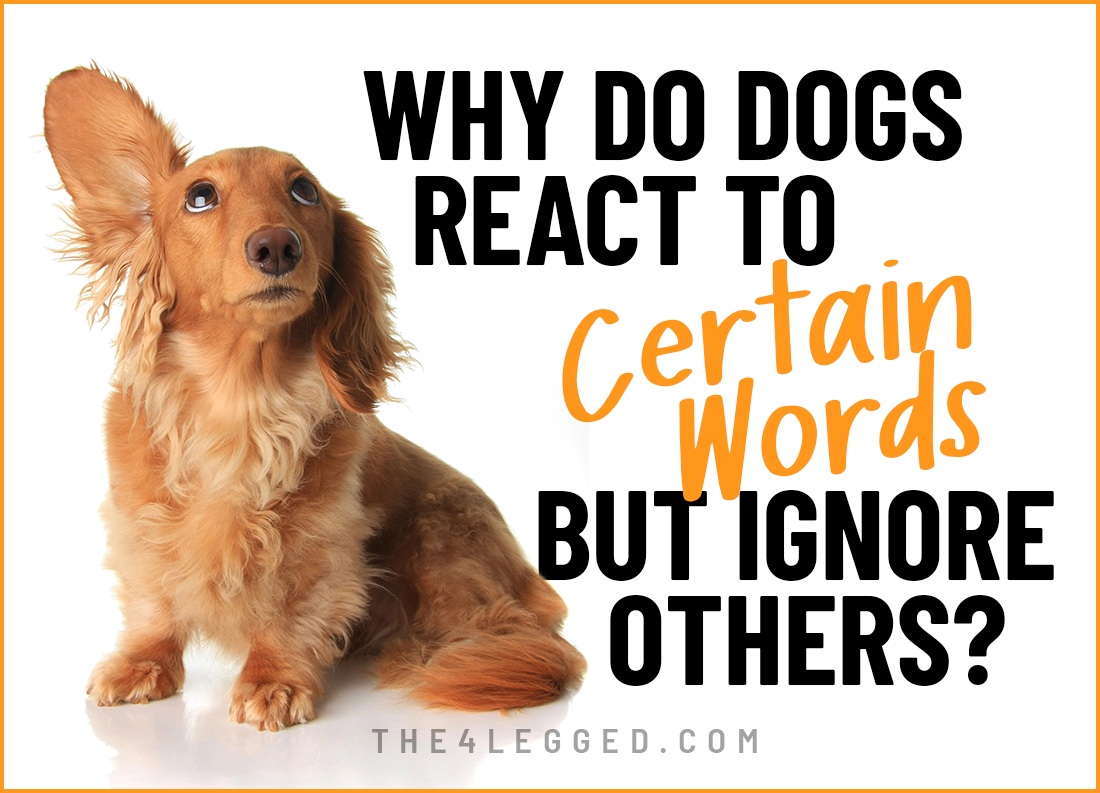
Every dog owner has experienced this puzzling moment: you whisper “walk” and your pup rockets to the door, but you can shout “come” at the dog park until you’re hoarse with zero response. What’s going on in that furry head?
The answer isn’t about your dog being stubborn or “not smart.” Dogs respond most strongly to high-value reinforcement words such as treats, walks, and playtime, but may ignore other words due to confusion or lack of generalization. How they process and learn human words is influenced by patterns, tone, consequences, and even their breed and working history. Understanding this changes everything about how you communicate with your pet.
Key Takeaways
- Dogs respond best to words that consistently predict positive outcomes like treats, play, or walks.
- Simple, distinct words are easier for dogs to learn than long, complex sentences.
- Dogs process vocabulary in the left brain while interpreting emotional intonation in the right.
- Tone, body language, and context play crucial roles in how dogs interpret and react to words.
- Consistent training with clear, simple cues and high-value rewards builds reliable communication with your dog.
Quick Answer: Why Some Words “Work” and Others Don’t
Dogs don’t understand language the way humans do. They’re not parsing grammar or vocabulary. Instead, they’re brilliant at detecting sound patterns and connecting them to what happens next.
Here’s the quick breakdown of why your dog responds to certain words and seems to ignore others:
- Associative learning in dogs: The word predicts something important (food, play, outside)
- Tone and pitch: How you say it matters as much as what you say
- Context and body language: Your posture, movement, and the environment shape meaning
- Overused or “poisoned” cues: Words that predict nothing good—or something bad—get filtered out
Dogs often choose which commands to follow based on training consistency, the value of the reward, and environmental distractions. They also better recognize words linked to specific daily routines and visual cues, so pairing words with physical demonstrations is more effective.
For example, “walk” probably predicts leash, door, outside, sniffing, and adventure. Your dog has learned this through hundreds of repetitions. Meanwhile, “please stop chewing that” predicts… what exactly? No consistent reward, no clear action, just background noise.
The good news: once you understand how your dog’s brain processes words, you can teach reliable responses to the cues that matter most. We’ll cover practical training techniques, how to fix cues that have stopped working, and how to build clear communication your dog will actually follow.
How Dogs Actually Process Human Words
Studies between 2015 and 2025 have revealed fascinating insights into canine cognition. Dogs do process parts of human speech, but their brains work differently from ours.
Dogs are primarily:
- Sound-pattern detectors: They recognize specific syllables and phonemes, not full sentences. The sharp “k” sound in “cookie” or the drawn-out “aw” in “walk” become auditory signatures they learn to identify.
- Emotion readers: Your dog’s brain is highly tuned to tone and intensity. A 2025 study in Animal Cognition found that dogs can recognize words even in monotonous speech, but emotional prosody significantly boosts engagement.
- Context readers: What usually happens after the word? Where are you standing? What time is it? Dogs integrate all this information to predict what’s coming.
Some dogs demonstrate remarkable word-learning abilities. Chaser, a Border Collie studied by researchers, learned over 1,000 object names and retained them for at least two years. Gifted Word Learner dogs can even pick up new labels by overhearing conversations at about 90% accuracy.
But here’s what matters for most people: these exceptional dogs are the outliers. Research suggests typical pet dogs understand somewhere between 10 and 50 cues when properly trained. They’re not learning language—they’re learning that specific sounds predict specific outcomes.
When your dog hears “sit,” they’re not translating the English word. They’re recognizing a sound pattern that, in the past, led to chicken or cheese appearing in their mouth. That’s the foundation of everything that follows.
Associative Learning in Dogs: The Core Reason Some Words Matter
Associative learning in dogs is the primary mechanism that determines which words get a response and which get ignored. Words become meaningful when they’re repeatedly paired with specific outcomes—and meaningless when they’re not.
This works through two interconnected processes:
Classical conditioning is what Pavlov made famous. When you say “walk” and then grab the leash, open the door, and head outside, your dog’s brain creates a neural link between that sound and the excitement of going out. The word itself starts triggering anticipation. Research shows dopamine release occurs when dogs hear well-conditioned cues, creating genuine excitement before the reward even arrives.
Operant conditioning adds the behavior component. When your dog hears “sit,” performs the action, and immediately receives a high value treat, the behavior gets reinforced. Studies indicate dogs typically need 10-20 consistent repetitions with an 80-90% reinforcement rate to form reliable associations between a word and an action.
Here’s how this plays out in everyday life:
- You say “dinner”
- You walk to the kitchen
- You open the kibble container
- You fill the bowl
- Repeat daily for a week
By day seven, your dog is racing to the kitchen the moment they hear “dinner.” The word has become a predictor of something valuable.
Now consider the opposite scenario. You say “leave it” occasionally while your dog is sniffing something, but sometimes you let them sniff anyway, sometimes you pull them away, and sometimes you’re not even paying attention. What does “leave it” predict? Nothing consistent. It becomes background noise that the dog filters out.
Common cues that typically work well include:
- “Walk” or “outside” → predicts exercise, exploration, sniffing
- “Dinner” or “eat” → predicts food arriving
- Toy names → predicts play session starting
Words that often get ignored follow the same pattern in reverse: they don’t predict anything worth paying attention to.
Why Your Dog Reacts to Words Like “Walk” but Ignores “No”
This is the question that frustrates most owners. Your dog sprints across the house when you open a crinkly treat bag, but completely ignores you calling their name at a busy dog park. What gives?
The answer lies in what each word predicts—and whether that prediction is worth the dog’s attention.
High-value associations create instant responses:
- “Walk,” “dinner,” “treat,” or toy names predict strong rewards or fun experiences
- These words have been consistently followed by something the dog genuinely wants
- The response becomes almost automatic, like how you might salivate smelling your favorite food
Low-value or negative associations create the opposite:
- “No,” “stop,” or “leave it” often predict loss of fun, scolding, or nothing clear at all
- The dog’s name, when only used for recall during unwanted events, becomes a warning signal
- Words spoken with no follow-through teach dogs that ignoring is perfectly fine
Some cues become what trainers call “poisoned.” This happens when:
- “Come” is only called when it’s time to leave the fun (end of park time, bath time, nail trims)
- “Crate” always precedes isolation without enrichment
- The dog’s name is primarily used during scolding or frustration
Here’s a scenario that plays out in countless households: You’re at home and whisper “cookie” while standing near the treat jar. Your dog materializes instantly from wherever they were hiding. Later that afternoon, you’re at a busy park, and you shout your dog’s name repeatedly while they completely ignore you to keep playing with other dogs.
What’s the difference? “Cookie” predicts an immediate, delicious reward with near-100% reliability. Your dog’s name at the park? It might predict fun ending, leash going on, or nothing at all. The competing smells, sounds, and social opportunities at the park are simply more interesting than an inconsistent cue. Dogs often respond better to commands when they are in a familiar environment, which is why your dog may listen at home but not at the park.
This isn’t stubbornness or disrespect. It’s your dog making perfectly rational choices based on what they’ve learned each word predicts.
The Role of Tone, Pitch, and Body Language
For many dogs—especially those early in training—how you say something matters more than the exact word. Your voice and body are constantly communicating, whether you intend them to or not.
Tone and pitch effects are significant:
- High, sing-song tones capture attention and create excitement. Training studies show high-pitched, enthusiastic delivery can boost response rates by 40-50%.
- Low, firm tones may signal caution or “uh-oh.” This activates different neural pathways in your dog’s brain.
- Monotone chatter becomes “white noise.” When you talk to your dog constantly without clear cues or consequences, most of what you say gets filtered out.
Body language shapes meaning even more powerfully. Your dog is watching you constantly, reading your posture, movement, and facial expressions. Consider these contrasts:
- “Come” while you loom over your dog with tense posture feels threatening. The same word while you crouch low and open your arms invites approach.
- “Sit” spoken while you lean forward and stare intensely creates pressure that may confuse a fearful dog. A calm dog responds better when you stand relaxed and give them space to think.
- “Good boy” muttered while scrolling your phone feels different than enthusiastic praise with eye contact and maybe a belly rub.
Research from PMC studies found that live, direct human speech yields 85-95% accuracy for trained behaviors, but recorded voices drop success to 60-70%. Mouth movements and body language contribute an additional 10-15% improvement. Dogs integrate all these signals together.
The practical takeaway: your tone and body language can rescue a weak cue or completely ruin a strong one. A well behaved dog responding to clear, consistent signals isn’t showing “respect”—they’re responding to communication they can actually understand. Pay attention to what your whole body is saying, not just your words.
Why Dogs Ignore Familiar Words: Common Training and Context Mistakes
When your dog ignores a word they definitely “know,” it’s rarely stubbornness. It’s usually confusion, poor training history, or competing priorities making the decision for them.
Several common mistakes cause this breakdown:
Inconsistent wording fragments associations. Using “down,” “off,” “get down,” and “lie down” interchangeably means your dog has to learn four different sounds instead of one. Research suggests this requires 2-3 times more repetitions to build any reliable response. Pick one word per behavior and stick with it. Everyone in the house needs to use the same cue.
Repeating cues dilutes meaning rapidly. When you say “sit sit sit sit” before your dog finally sits, you’re teaching them that the cue is actually “sit-sit-sit-sit”—or worse, that they can ignore the first three. Studies show this kind of repetition can reduce cue salience by 50-70% per training session. Say it once, then help your dog succeed.
No follow-through or reward teaches dogs that ignoring is fine. If you say “come” and your dog doesn’t respond, and nothing happens, they learn that coming is optional. Every unreinforced repetition weakens the cue.
Context and generalization failures are extremely common. Your dog sits perfectly when you say “sit” in the kitchen where you’ve practiced hundreds of times. Success rate: 95%. Then you try “sit” at a café patio with foot traffic, other dogs, and fascinating smells. Success rate: maybe 20-30%.
Dogs don’t automatically generalize. A cue learned in one environment doesn’t transfer to new environments without practice. The kitchen-trained sit and the park sit are essentially different skills that need separate training.
Embedding cues in chatter makes them invisible. If you constantly say things like “Do you want to go outside? OK, just sit down for a second, let me grab my phone,” your dog learns to tune out most of what you say. The cue “sit” becomes buried in meaningless sounds. Keep cues clean, clear, and distinct from casual talk.
Common habits that cause dogs to ignore cues:
- Using the dog’s name constantly without any follow-up (name becomes meaningless)
- Giving cues from another room where the dog can’t see or hear clearly
- Expecting the same response in high-distraction environments without progressive training
- Assuming the dog is being “bad” instead of recognizing they’re confused or unmotivated
Building Clear, Reliable Word Cues Your Dog Will Actually Follow
The encouraging news: any owner can build—or rebuild—reliable word cues using consistent associative learning and good timing. This doesn’t require expensive dog training classes or professional intervention for most dogs, though a skilled dog trainer can certainly accelerate progress.
Here’s a practical training plan for teaching any new cue:
Step 1: Choose one simple word per behavior. “Come,” “sit,” “down,” “stay,” “leave it.” Don’t use sentences. Don’t vary the word. One sound, one meaning.
Step 2: Say the cue once, then help your dog succeed. Use a treat to lure them into position if needed. For recall, say “come” once, then encourage movement toward you with your body language and an excited tone. Never repeat the cue—if they don’t respond, help them physically or wait and try again.
Step 3: Reward within 1-2 seconds. Timing is critical. The brain forms associations between events that happen close together. When your pup sits and gets chicken one second later, the connection is strong. If the reward comes five seconds later, the association weakens significantly. Use high value treats like cheese, cooked chicken, or freeze-dried liver for important cues like recall.
Step 4: Repeat in short sessions. Aim for 5-10 repetitions per session. Keep sessions under 5 minutes to maintain focus and enthusiasm. Practice daily for at least 1-2 weeks before expecting reliability.
Step 5: Gradually increase difficulty. Start in your house with zero distractions. Once you’re hitting near-100% success, move to your backyard. Then a quiet street. Then a busier area. Then the dog park—but put your dog on a long line first for safety. Only add more distraction when you’re succeeding at the current level.
The goal is to reinforce recall and other critical behaviors so heavily that responding becomes more rewarding than ignoring. High value rewards matter here. For most dogs, a tiny piece of kibble can’t compete with chasing a squirrel. But a chunk of rotisserie chicken? That changes the equation.
When a Word Has Been “Poisoned” and How to Start Over
A “poisoned cue” is a word that now predicts something unpleasant, confusing, or simply not worth the dog’s effort. When this happens, no amount of repetition will fix it—you need a fresh start.
Common examples of poisoned cues:
- “Come” only called when it’s time to leave the dog park or submit to nail trims. The dog learns that coming ends fun, so they stay away.
- “Crate” always followed by hours of isolation without enrichment. The word now triggers avoidance.
- The dog’s name used primarily during scolding, frustration, or when the dog is in trouble. Hearing their name becomes a warning sign rather than an invitation.
If you notice your dog consistently turning away, showing difficulty responding, or demonstrating signs of fear when they hear a particular word, it may be poisoned.
Here’s how to start over:
Stop using the old word entirely. Don’t try to “fix” it by adding more rewards. The negative association is already formed. Give it a rest for several weeks.
Choose a completely new cue. Instead of “come,” try “here!” or “this way!” Instead of “crate,” try “bed” or “place.” The fresh word has no baggage.
Build a strong positive association from scratch. For recall, say your new cue, then immediately deliver an amazing reward—no behavior required at first. Just: word → treat, word → treat, word → treat. Repeat 10-20 times per day for 1-2 weeks. Then start requiring movement toward you before rewarding.
Be relentlessly consistent. Everyone in the house must use the new word and the same reward strategy. One person using the old poisoned cue, or using the new cue inconsistently, can sabotage the whole process.
Know when to seek help. If your dog shows signs of fear, barking, or has any history of defensive behavior linked to a cue, consult a reward-based trainer or veterinarian behaviorist. A professional can create a structured training plan that addresses underlying fear safely.
Most poisoned cues can be rehabilitated within a few weeks of dedicated work. The key is patience—you’re building an entirely new word-association from the ground up.
Turning Everyday Talk into Valuable Communication
Why do dogs react to certain words but ignore others? It comes down to one principle: dogs respond to words that have clear, consistent, rewarding histories—delivered with helpful tone and body language—and filter out everything else.
Your dog isn’t being difficult when they ignore you. They’re making rational choices based on what each word has predicted in the past. Expect a response? Build the association that earns it.
Moving forward, here’s what matters:
- Choose a handful of “important” words and train them deliberately with positive reinforcement
- Stop over-talking and repeating cues—say it once and make it matter
- Watch your dog’s behavior and body language to see what’s actually being understood
- Match your tone and posture to what you’re asking
With a few weeks of focused associative learning—clear cues, good timing, and valuable rewards—most dogs can reliably respond to 10-20 words. Your adult dog, your new pup, even an older dog who seems to have given up listening: all of them can learn when the world makes sense.
Start today. Pick one cue that matters to you—maybe recall, maybe “leave it,” maybe just a reliable “sit.” Grab those high value treats, find a quiet spot in your house, and begin building the association. You might be surprised how quickly your dog starts to listen when they finally have a reason to.
Summary and Next Steps
Understanding why dogs react to certain words but ignore others is key to improving communication with your furry friend. Dogs respond best to words associated with positive outcomes, delivered with clear tone and body language, and consistently reinforced through training. Avoid confusing or overused commands, and focus on building strong associations with simple, distinct cues. Remember, your dog’s responsiveness depends on the value they place on the word’s predicted outcome and the context in which it’s used. If you love exploring strange, weird, bizarre, or unusual questions about dog habits & quirks, you’ll find plenty more to explore.
Ready to strengthen your bond and enhance your dog’s skills? Start today by choosing one important cue, using high-value rewards, and practicing in a distraction-free environment. With patience and consistency, you’ll see your dog respond eagerly to the words that matter most.
Take the first step now—grab some tasty treats, find a quiet spot, and begin training your dog with clear, consistent cues. Your best-behaved companion is just a few sessions away!
Frequently Asked Questions
Why do puppies have the hardest time learning certain words?
Puppies are still developing their cognitive and auditory skills, which means they take longer to associate words with outcomes. Their attention span is shorter, and they require consistent, patient training with clear cues and high-value rewards to build strong word associations.
How can I help my dog respond better to commands in distracting environments?
Training your dog in various settings gradually increases their ability to generalize commands. Start in quiet spaces and slowly introduce distractions while maintaining high-value rewards and clear cues. This process helps your dog learn to control their focus regardless of the environment.
What should I do if my dog seems to hang on to bad habits and ignores commands?
Consistency and timing are key. Avoid repeating commands multiple times, use high-value treats to motivate your dog, and practice regularly in different environments. If a command has become a “poisoned cue,” consider replacing it with a new word and rebuilding positive associations from scratch.
Does the tone of my voice really affect how my dog responds?
Yes, dogs are highly sensitive to tone and pitch. Cheerful, high-pitched tones encourage engagement and positive responses, while low or stern tones often signal correction or caution. Using the right tone helps your dog understand what you want and how to react.
Can older dogs learn new words as effectively as puppies?
Older dogs might have a harder time due to physical or cognitive changes, but they can absolutely learn new words with consistent training. Using a clear course of training, patience, and high-value rewards can help older dogs improve their responsiveness and control.