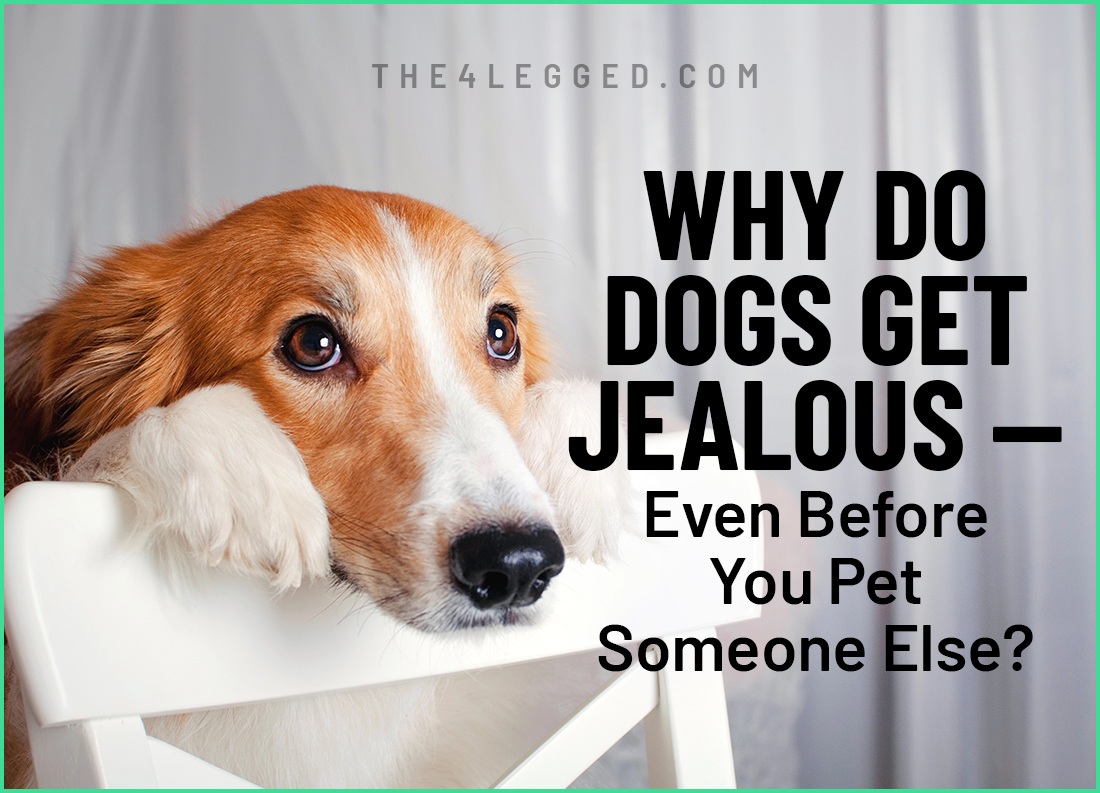
At the dog park, you glance at a friend’s golden retriever just as your own dog suddenly wedges between you, pawing at your leg—before you even reach out. Sound familiar?
Many dog owners have seen this instant, almost pre-emptive jealousy. It’s not spite; it’s your dog sensing a shift in your attention and reacting to protect what they value most: you.
From a Labrador jumping up at a 2023 Austin dog park to a terrier whining at home, dogs aren’t mind-readers—they’re experts at reading patterns. This article explores why dogs get jealous even before you pet someone else, what their body language tells us, and how to help them feel secure.
Key Takeaways
- Dogs display jealous behavior due to their strong attachment to their owners and their instinct to protect valued social resources like attention and affection.
- Jealousy in dogs often occurs before petting happens because they anticipate the shift in attention through subtle cues and learned patterns.
- Managing jealousy involves recognizing early signs, setting clear boundaries, rewarding calm behavior, and providing consistent one-on-one attention to help dogs feel secure.
Do dogs really get jealous?
Most behavior experts agree that dogs display jealous behavior, even if scientists continue debating the precise labels. Whether or not dogs experience such a complex emotion exactly as human beings do, the behavioral patterns are unmistakable and consistent across dog breeds and households.
Dogs are highly social animals whose emotional phenomena are shaped by thousands of years of domestication alongside humans. Research suggests that the human-canine bond activates similar brain regions in dogs as parent-child bonds do in people. Dog jealousy is often compared to human infant jealousy, demonstrating similarity in emotional reactions to perceived threats to relationships. When that bond feels threatened—whether by other dogs, a new pet, or even a fake dog used in experiments—dogs react.
Experts note that a dog’s mind can develop nuanced mental states, including jealousy, suggesting dogs possess a more advanced emotional life than traditionally believed.
Jealousy in dogs often appears when a valued relationship or resource feels at risk. Your time, attention, and affection function as high-value social resources. When your human companion interacts with someone else, or when you reach toward other animals, your dog may perceive a threat to their access.
It’s important to distinguish jealousy from other emotions:
| Emotion | Key Signs | Context |
|---|---|---|
| Jealousy | Pushing in, whining, pawing, blocking | When attention shifts to another |
| Fear | Avoidance, hiding, cowering | Perceived threat or danger |
| Excitement | Jumping, spinning, vocalizing | Anticipation of positive event |
Common jealous behaviors include:
- Pushing between you and the “rival”
- Whining or vocalizing when you look away
- Pawing at your hand or leg
- Sudden clinginess during greetings
These reactions are real emotional responses, not manipulation. Dogs feel jealous in ways that matter to them—and to us.
Why do dogs get jealous — even before you pet someone else?
Here’s the core question many dog owners ask: why does my dog react before I’ve even touched anyone? The answer lies in anticipation.
Dogs are expert readers of micro-cues. They notice your eye contact shifting, your body angle turning, your hand twitching toward another dog or person. These signals tell them what’s coming—often seconds before any contact happens. Your dog isn’t responding to the petting itself; they’re responding to the prediction that petting is about to occur.
This predictive ability develops through learned patterns. If, throughout 2022 and 2023, your dog repeatedly observed you crouch toward another dog and then deliver treats or affection, they now react at step one of that chain. The shoulder turn, the name-calling, the lean forward—these become triggers that activate the jealous response before the actual event.
Frame this as a combination of emotional attachment (they value you deeply) and resource protection (they value your time and touch). A dog’s jealousy stem primarily from possessiveness towards their owner, which can resemble resource guarding—asserting ownership over you, especially when attention is at stake or when they perceive a threat to their relationship with you. Your dog’s jealousy stem from very primal instincts refined through domestication. They’ve evolved to maintain proximity to their primary human, and anything threatening that proximity triggers protective behavior. Dogs evolved to maintain their connection with a primary caregiver from interlopers, as this relationship is a vital resource for security and survival.
Anticipation and pattern learning
Dogs form tight associations through what behaviorists call classical conditioning—Pavlovian-style learning. Unlike humans, who might need many repetitions to form habits, dogs can link stimuli to outcomes over just dozens of repetitions.
Consider a 2024 example from a multi-dog household: every evening, the owner sits on the couch and pats the cushion. The second dog gets invited up for cuddles. The first dog has witnessed this hundreds of times. Now, the moment the owner reaches for that cushion, dog one rushes over and attempts to claim the spot.
The jealous response occurs at the very first cue in the behavioral chain:
- Your shoulders turn toward another dog
- You say another dog’s name
- You crouch or lean forward
- Your hand extends in their direction
Each of these signals predicts “attention elsewhere,” and your jealous dog reacts accordingly. This isn’t conscious scheming—it’s deeply ingrained pattern recognition that happens automatically in the dog’s mind.
Attachment and fear of losing your attention
Dogs form strong attachment bonds similar to those between a young child and a parent. Researchers have applied attachment theory—originally developed for human infant studies—to understand canine behavior, finding striking parallels.
Many jealous reactions are driven by insecurity or fear of being left out rather than dominance or aggression. Dogs thrive on predictability and connection. When that connection feels threatened, anxiety rises.
Consider a dog whose owner started a demanding new job in 2021. Suddenly, daily walks shortened, evening cuddle time disappeared, and the dog spent more hours alone. This dog became hyper-vigilant to any sign of divided attention. A mere lean toward a baby prompts pacing. A glance at the phone triggers whining.
Understanding this helps pet parents feel compassion rather than frustration. Your dog isn’t being “bad”—they’re expressing vulnerability. The accompanying behavior is their way of saying, “Please don’t forget about me.”
Resource guarding of you (as a social resource)
Resource guarding doesn’t just apply to food and toys. Your affection, time, and physical presence can also be guarded resources. This territorial behavior stems from pack instinct—dogs maneuver to protect what they perceive as theirs.
Some dogs position themselves between you and another dog or person as if “claiming” you. They might:
- Rush to your side when a rival approaches
- Block access to your lap or spot on the couch
- Stand stiffly between you and a guest
This guarding often starts before contact. The moment they see a rival approach—whether a friend entering your home or another dog at the park—they rush in as a pre-emptive move. Your dog’s sole aim is to maintain their position as your primary focus.
Mild guarding can be managed through training. However, hard stares, growling, or snapping around people are red flags requiring professional help from a certified behaviorist or professional dog trainer.
Statistics from veterinary clinics indicate that 20-30% of multi-dog households report resource guarding behaviors around owners. Recognizing these patterns early prevents escalation into dangerous behavior.
What does jealous behavior look like in dogs?
Jealousy can be subtle or dramatic, and learning to read your dog’s body language is crucial for understanding their emotional state and preventing escalation. Not all dogs express jealousy the same way—some are pushy extroverts while others are quiet internalizers. Displaying jealous behavior can be recognized by observing these signs, and managing it involves providing appropriate attention, avoiding reinforcement of jealousy, and using training and reassurance to reduce such behaviors.
Common physical and behavioral signs include:
- Body blocking: Positioning themselves between you and the “rival”
- Whining or vocalizing: Sounds that increase when your attention shifts
- Pawing and nudging: Physically demanding your focus
- Barking: Directed at the person or animal receiving attention
- Sudden clinginess: Pressing against you when you greet someone else
Physical interventions by jealous dogs often include pushing, nudging, or wedging themselves between their owner and the perceived rival.
Timing matters. According to aggregated owner surveys, 80% of jealous behaviors begin at greeting cues—not after petting has occurred. Your dog asserts themselves the moment they detect a threat.
Some dogs experience jealousy differently. Rather than pushing in, they withdraw. Watch for:
- Lip licking or yawning (stress signals)
- Turning away or leaving the room
- Over-grooming (excessive licking or paw chewing)
These internalizers need attention too. Their jealous behaviour may occur out of sight but still indicates emotional distress.
Track patterns over days and weeks rather than single incidents. A dog’s behavior reflects their emotional state, so early intervention is important to prevent escalation. Context matters—a dog stressed by a 2020-2021 pandemic socialization gap might react more intensely to visitors than a well-socialized pup.
Early, subtle signs vs. obvious outbursts
Learning to spot subtle signals helps you address jealousy before it becomes an outburst.
Subtle signs:
- Body stiffening when you look at another dog
- Leaning into your leg
- Quietly sliding into the space between you and the “rival”
- Ears rotating toward the perceived threat
- Slight weight shift toward you
Overt behaviors:
- Barking directly at your friend
- Jumping up when you reach toward another dog
- Knocking a child’s hand away from you
- Lunging or snapping
The behavior expressed at the subtle stage is your opportunity for intervention. Calm redirection here prevents the louder, more intense reactions that follow. Many dog owners firmly believe they should wait for “real” problems—but by then, the emotional pattern is stronger and harder to change.
Common jealousy triggers: when your dog reacts before the petting happens
Jealousy often flares around predictable everyday routines, especially where your attention is split. By identifying specific triggers, you can predict and manage jealous episodes more effectively.
Understanding triggers helps you see your dog’s behavior not as random misbehavior but as predictable responses to specific situations. Let’s examine the most common scenarios.
Other dogs in the home
Multi-dog households are prime territory for jealous behaviors. Classic scenes include:
- One dog rushing in when another is called for grooming or training
- Competition over feeding order or who gets fed first
- Battles over prime spots next to you on the sofa
- Reactions when one dog receives treats during practice obedience commands
Jealousy can spike dramatically when a new dog joins the family. Data suggests a 40-50% increase in jealous behaviors following new adoptions, such as those common in 2023 when shelter adoption rates remained high.
When two dogs compete for your attention, both may escalate their bids. The situation can spiral if you inadvertently reward the pushy behavior by giving in to whichever dog is loudest.
Management tips:
- Schedule predictable one-on-one time with each dog
- Use separate rooms during high-value activities (special treats, grooming)
- Reward calm behavior when both dogs are present
- Avoid creating competition by treating dogs simultaneously when possible
Babies, kids, and new partners
The arrival of a baby arrives or a new partner joins the household can shift your daily focus overnight. Dogs notice this immediately—and they react to the setup before any physical contact occurs.
Concrete examples include:
- A dog pacing or whining as you lean in to hug your partner on the couch
- Restlessness when you lift the baby from a crib
- Positioning between you and a toddler during playtime
These reactions happen before you physically pet or hold anyone else. Your dog perceives the postural cues—the lean, the reach, the shift in attention—and responds preemptively.
Life changes create uncertainty, and dogs experience jealousy more intensely during transitions. A dog who was once calm may suddenly demonstrate negative behavior when they sense their place in the family shifting.
Management tips:
- Maintain exercise and play routines even during major life changes
- Include your dog in family activities when safe
- Create positive associations between the new person and good things (treats, walks)
- Avoid punishing jealous reactions, which can increase anxiety
Strangers and visitors
Guest arrivals trigger jealousy in many dogs. Watch for:
- Wedging between you and a visitor during greetings
- Vocalizing when you reach toward a guest’s shoulder
- Rushing to position themselves when the doorbell rings
- Blocking access when three adorable dogs at a friend’s house compete for attention
Limited socialization before 2020-2021 left many dogs—particularly those adopted during pandemic years—extra wary and reactive to visitors. Shelter data from 2021-2022 suggests 25-35% of young dogs remained undersocialized due to lockdowns and reduced exposure to varied social situations.
Management tips:
- Use leashes or baby gates during initial greetings
- Have high-value treats ready to reward calm behavior
- Practice greeting scenarios before real visitors arrive
- Allow your dog a safe retreat space if overwhelmed
Is canine jealousy the same as human jealousy?
The word “jealousy” is convenient, but dogs don’t think in the same complex stories human beings do. Human jealousy involves cognitive narratives—thoughts about betrayal, comparison, and imagined futures. Dogs operate differently.
Research suggests that dogs likely experience a blend of basic emotions—frustration, fear, desire for attention—that looks like jealousy to observers. According to basic emotion theory, animals possess fundamental emotional states that evolved for survival. NCBI describes jealous behaviors in dogs as responses to social threats rather than elaborate emotional plots. Studies also show that dogs display jealous behaviors even when an interaction is hidden by barriers, demonstrating their mental capacity for social threat representation.
Two widely accepted theories explain canine emotions:
- Basic emotions theory: Dogs have core emotions (fear, joy, anger, disgust) that combine in various ways
- Complex emotions theory: Dogs may experience more complex emotions including jealousy-like states
The ongoing debate in animal behavior research asks whether dogs truly have complex or compound emotions or simpler emotional systems producing behavior that resembles jealousy. Dog’s jealousy can manifest as possessiveness, resource guarding, and attention-seeking behavior, making proper management important to prevent reinforcement of these behaviors and to address any escalation. Scientists studying nonhuman animals emotional experiences continue investigating.
For practical purposes, the labels matter less than the experience. Your dog’s jealousy is real enough to affect their wellbeing and your relationship. Whether we call it “true” jealousy or combined emotions of frustration and insecurity, the feelings deserve empathy and training support.
How dogs experience emotions differently
Dogs live more in the moment than humans. Their reactions are immediate and cue-driven rather than sustained grudges or elaborate plots. Functional MRI studies from the 2010s show that dogs’ brains lack the sustained prefrontal rumination humans experience during jealousy.
When your dog reacts jealously, they’re essentially communicating: “I want that attention too, right now.” Not: “You’ve always loved them more than me, and I’ll never forgive you.”
This distinction is hopeful. Because canine jealousy is moment-based, it’s responsive to training and environmental changes. Dogs don’t hold grudges the way humans might. Tomorrow is a fresh start.
Consider a training success case: A dog in a multi-pet household demonstrated pre-emptive jumping and whining whenever the owner approached the other dog. After 3-6 months of consistent mat-settling rewards, the jealous reactions diminished dramatically. The dog learned a new pattern: “Owner approaching other dog = I go to my mat = I get treats.”
Your dog’s jealous streak can change with patience, consistency, and proper socialization reinforcement.
How to respond when your dog gets jealous — before you pet someone else
The goal isn’t to punish jealousy—it’s to help your dog feel secure. Punishment increases anxiety and often worsens the very behaviors you’re trying to eliminate. Dog’s bad behavior, such as jealousy-driven actions, should not be rewarded or reinforced, as this can encourage the behavior to continue. Instead, focus on prevention, alternative behaviors, and consistent rewards for calm responses.
Important caveat: severe aggression or bites require help from a certified behavior professional or veterinarian. Dog’s jealousy can be harmful, leading to stress, resentment, and destructive behaviors. If your dog’s bad behavior includes hard stares, growling, snapping, or actual bites—especially around children—seek professional guidance. Statistics suggest 5-10% of jealousy-related cases involve bites.
For the majority of dogs demonstrating jealous behaviors at milder levels, these strategies work well.
Teach a “jealousy-safe” default behavior
Give your dog something specific to do when jealousy-triggering situations arise. Simple default behaviors include:
- “Go to mat”: Dog moves to a designated spot
- “Sit and watch me”: Dog sits and maintains eye contact
- “Settle on bed”: Dog lies down in their designated area
The key is teaching these behaviors before you need them. Practice in low-distraction situations first:
- Choose the behavior and a consistent cue word
- Reward generously when your dog complies
- Practice dozens of repetitions over days
- Gradually add mild distractions
- Eventually practice with real triggers (doorbell, guests, other pets)
Timing matters: reward your dog for moving to their spot as soon as they see early cues—like you standing up to open the door. This teaches them to respond to the same predictive signals that currently trigger jealousy.
Trainer reports suggest 70-80% success rates in consistent programs. The same cue, same spot, and frequent rewards build habits stronger than the original jealous reaction.
Reward calm behavior around “rivals”
Systematically change your dog’s emotional response to situations that trigger jealousy. Use treats, play, or affection to reward relaxation while you interact with others.
Start with tiny steps:
- Glance at another dog for one second → treat your dog
- Turn your shoulders slightly → treat
- Take one step toward someone else → treat
- Brief touch of another person → treat
Build gradually to full petting sessions with others while your dog remains calm. This process, called counterconditioning, pairs the formerly threatening situation with positive outcomes.
Tips for success:
- Use high-value rewards (favorite snacks, novel treats introduced recently)
- Keep sessions short—end before your dog gets frustrated
- Watch for early stress signs and back up to easier steps if needed
- Involve all family members for consistency
Critical rule: avoid rewarding pushy behavior with attention, even negative attention. If your dog jumps, whines, or pushes in, turn away or wait. Reward only calm alternatives. This prevents accidentally reinforcing the unhealthy response.
Protect everyone’s safety and set fair boundaries
Clear household rules help dogs understand expectations:
- No jumping on guests
- No pushing children
- No guarding laps or couches from other family members
- All family members enforce rules consistently
Physical management tools help during high-risk situations:
- Leashes for control during greetings
- Baby gates to create separation
- Crates as safe retreat spaces
- Exercise pens for supervised parallel time
Document incidents with dates and brief notes. This log helps you:
- Track patterns and progress
- Identify specific triggers
- Share concrete information with trainers or vets if needed
Red flags requiring professional consultation:
- Growling at family members
- Snapping or air-biting
- Hard, fixed stares
- Rigid, stiff posture before contact
- Any contact aggression
Your dog’s territorial instincts and aggressive behavior or destructive behavior patterns need expert guidance. Don’t wait for escalation.
Helping your dog feel secure for the long term
With patience and structure, most dogs learn to handle your attention being shared. The jealousy that seems overwhelming today often becomes manageable—or disappears entirely—with consistent effort.
Daily habits that build security:
| Habit | Benefit | Time Required |
|---|---|---|
| Predictable routines | Reduces anxiety about what comes next | Consistency throughout day |
| Exercise | Burns energy, reduces reactivity | 30-60 minutes daily |
| Mental enrichment | Provides focus and satisfaction | 15-30 minutes daily |
| Training games | Builds confidence and communication | 5-15 minutes daily |
| One-on-one time | Reinforces individual bond | Variable but dedicated |
Enrichment ideas that help overly anxious dogs:
- Puzzle feeders with food reward
- Snuffle mats for meals
- Training sessions for dogs playing learning games
- Chew toys for stress relief
- Nose work activities
For multi-pet households, dedicated one-on-one time with each dog ensures no one feels chronically overlooked. Even 10 minutes of focused attention daily can reduce competition and jealousy.
Understanding why dogs get jealous — even before you pet someone else — is the first step to preventing the dog’s jealousy harmful cycle. Your dog isn’t plotting against you or acting out of spite. They’re responding to predictive cues with emotions shaped by evolution, attachment, and experience.
The good news: these patterns are malleable. Basic emotions evolved as survival trait responses, but they can be redirected through training and relationship-building. Your dog perceives the world through learned associations—and you can teach new, calmer associations.
This week, try observing your dog more closely. Notice when they act excited versus when tension appears. Watch for those subtle early signals. Identify one specific trigger and practice rewarding calm behavior in that situation.
Small, positive changes accumulate. With empathy, consistency, and time, you’ll help your dog feel secure enough to share you with the world—one greeting at a time.
Summary
Dogs get jealous even before you pet someone else because they are highly attuned to subtle cues and patterns that predict a shift in your attention. This jealousy stems from their deep emotional attachment to you, their pack-oriented ancestry, and their instinct to guard valued social resources like your time and affection. Recognizing the early signs of jealousy and understanding its roots can help you manage your dog’s behavior effectively.
Through consistent training, clear boundaries, and positive reinforcement, you can help your dog feel secure and reduce jealousy-driven reactions. Don’t let jealousy harm your bond with your furry friend—start observing your dog’s subtle signals today and implement calm, consistent training strategies to foster trust and security.
If jealousy behaviors escalate or become aggressive, seek guidance from a certified dog trainer or behaviorist. Your attentive care and proactive approach will ensure a happier, more harmonious relationship with your dog—because every dog deserves to feel loved and secure.
Frequently Asked Questions
What causes a dog’s jealous behavior related to other pets or people?
Dogs exhibit jealous behavior primarily because they are social animals with a strong attachment to their owners. Their jealousy often stems from a fear of losing attention or affection, which they view as valuable social resources. This behavior is influenced by their ancestry as pack animals and their sense of animosity toward perceived rivals.
Can dogs feel complex emotions similar to human-like emotions?
While dogs experience basic emotions such as joy, fear, and anger, many experts believe they can also feel complex emotions like jealousy. Research indicates that dogs’ emotional responses, including jealousy, share similarities with human emotions, though dogs live more in the moment and react to immediate cues rather than complex narratives.
How does a dog’s ancestry influence their jealous behavior?
A dog’s ancestry as a pack animal plays a significant role in their jealous behavior. Dogs have evolved to protect their social bonds within a pack, and their instinct to guard valued resources—including their owner’s attention—is rooted in survival mechanisms developed over thousands of years.
What are some common other behaviors that indicate jealousy in dogs?
Jealous behaviors in dogs can include pushing between their owner and another pet or person, whining, barking, pawing, and even growling. Some dogs may also show subtle signs like lip licking, yawning, or withdrawal. In some cases, jealousy can lead to destructive behaviors or indoor urination, especially if the dog feels neglected.
How can I help my dog manage jealousy and feel more secure?
Managing jealousy involves recognizing early signs and responding with positive reinforcement. Establish clear boundaries and teach your dog alternative behaviors, like going to a designated spot during triggering situations. Providing equal attention, including your dog in family activities, and maintaining consistent routines can help reduce jealousy and build your dog’s confidence.