
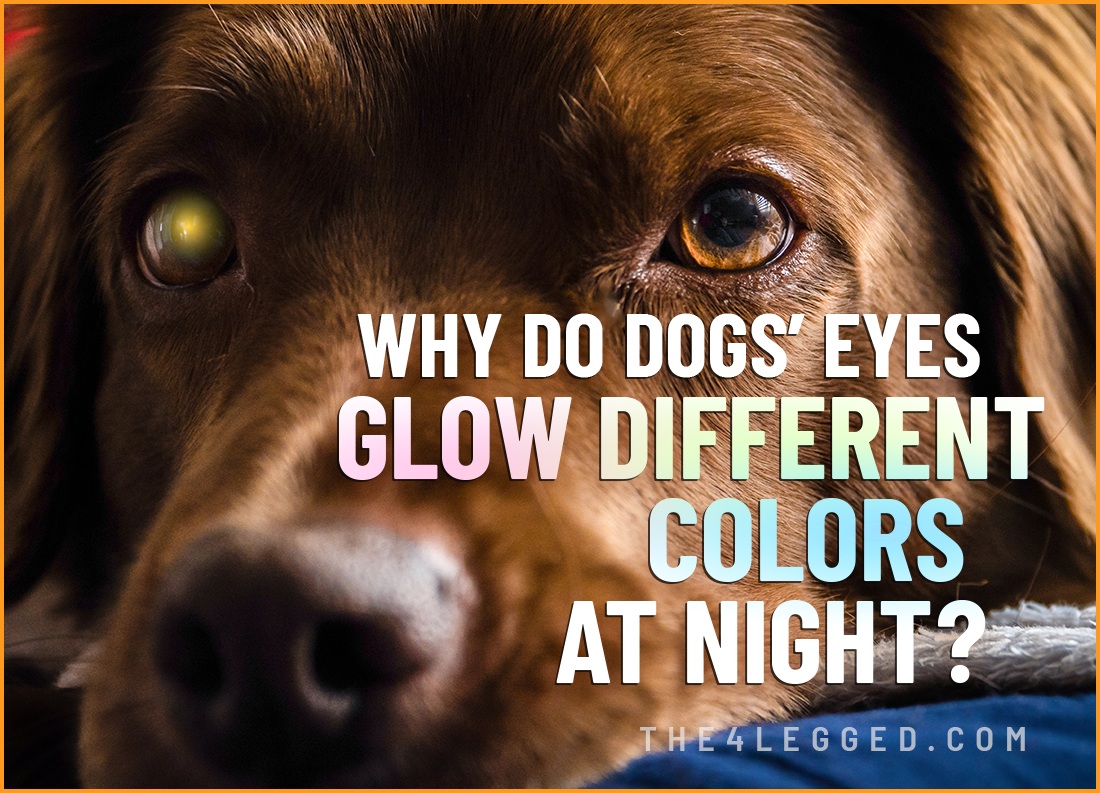
If you’ve ever snapped a photo of your dog in a dark room or caught them in your car headlights, you’ve probably noticed something striking: their eyes glow. This effect isn’t unique to dogs—many pets, including cats and other animals, show glowing eyes in low light thanks to a shared biological structure called the tapetum lucidum. This special reflective layer sits behind the retina and bounces incoming light back through the eye, helping animals see better at night and creating that eerie glow. If you’ve ever wondered why do dogs eyes glow different colors at night, the answer lies in how this structure is built and how it reflects light.
The color can range from green and yellow to blue, orange, or even red, with a dog’s eyes glow green being one of the most common sights in photos. While it can look almost supernatural, the cause is entirely natural—and understanding it can actually give you useful clues about your dog’s eye health.
Key takeaways:
- The tapetum lucidum is a reflective layer behind the retina that helps dogs see better in dim light by reflecting incoming light back through the retina.
- The color of dogs’ eye glow varies naturally due to factors like genetics, pigmentation, breed, age, and the light source.
- Glowing eyes at night are normal and painless for dogs, but sudden changes in glow color or asymmetry between eyes may indicate health issues requiring veterinary attention.
- Dogs still need some ambient light to see at night; the tapetum lucidum enhances available light but does not create light.
Quick answer: what makes my dog’s eyes glow at night?
That mysterious glow in your dog’s eyes comes from a special layer of tissue called the tapetum lucidum, positioned behind the retina at the back of the eye. Your dog’s eyes don’t create light on their own. Instead, this reflective layer acts like a biological mirror and reflects light back through the retina, increasing the amount of light that reaches the photoreceptor cells. This helps your dog capture more photons and see better in dim light, which is why their eyes glow when light shines directly at them.
The color of that glow—green, yellow, blue, orange, or even red—depends on several factors including eye structure, pigmentation, breed genetics, and age. Most dogs show a greenish-yellow reflection, but there’s plenty of natural variation. If your dog’s eyes glow in the dark when you point a flashlight their way or use a camera flash, that’s completely normal and not harmful or painful.
One thing to watch for: a sudden change in glow color, or one eye that stops glowing while the other remains bright, can indicate an underlying issue. In those cases, a quick call to your veterinarian is a smart move.
How dog eyes work differently from human eyes
At first glance, dogs and humans share similar eye anatomy. Both species have a cornea, pupil, lens, retina, and optic nerve working together to process visual information. Light enters through the cornea, passes through the pupil opening, gets focused by the lens, and lands onto the retina where photoreceptor cells convert it into signals for the brain.
The differences become clear when you look at what’s happening inside that retina. The retina contains two types of photoreceptor cells: rods and cones. Rods excel at detecting movement and working in low light conditions, while cones handle color perception and fine detail. Human eyes are cone-dominant, giving us excellent color vision and sharp visual acuity in bright light. Dogs, on the other hand, pack their retinas with far more rods than cones.
This rod-heavy arrangement means dogs sacrifice some color discrimination—they see the world primarily in blues and yellows—but they gain superior ability to detect motion in dim environments. Their pupils can also dilate much wider than human pupils, allowing significantly more light to enter at dawn, dusk, and throughout the night. These features enhance a dog’s ability to see in low-light conditions, making them much better adapted for night vision than humans.
The critical difference: Unlike humans, many animals that hunt or stay alert during twilight hours—dogs, cats, deer, cattle—have an extra layer of reflective cells behind the retina that humans simply don’t possess.
What is the tapetum lucidum and why does it make eyes glow?
The tapetum lucidum is a thin, mirror-like layer of tissue located behind the retina in most dogs, just in front of the choroid (the blood vessels that nourish the eye). Think of it as nature’s night-vision enhancer, built right into your dog’s eye.
Here’s what happens when light enters your dog’s eye at night:
- Light passes through the cornea and enters through the dilated pupil
- The lens focuses this incoming light onto the retina
- Photoreceptor cells (especially rods) absorb some of this light and convert it to visual signals
- Any light that passes through without being absorbed hits the tapetum lucidum
- The tapetum lucidum reflects this light back through the retina, giving photoreceptor cells a second chance to capture those photons
- The reflected light that doesn’t get absorbed exits back through the pupil—this is the glow you see
This “second pass” of light essentially doubles the opportunity for the retina to detect available photons. Research from veterinary ophthalmology suggests this adaptation allows dogs to see in light conditions roughly five times dimmer than what human eyes require.
The tapetum lucidum evolved to help canids—the dog family—thrive as crepuscular hunters, most active at dawn and dusk when prey animals are also moving. This adaptation helped wild ancestors track prey, avoid predators, and navigate safely through semi-dark environments. Your modern pet still carries this biological advantage, which is why they can confidently cross a dark room while you’re fumbling for a light switch.
Why do dogs’ eyes glow different colors?
Eye glow color varies naturally between individual dogs, and you might even notice differences between your own dog’s two eyes. This variation is completely normal and comes down to the composition of the tapetum itself.
The tapetum lucidum is made up of specialized reflective cells containing crystalline structures rich in zinc, riboflavin, and an amino acid called cysteine. These reflective crystals, combined with varying amounts of pigment, determine what wavelength of light bounces back—and therefore what color you perceive.
Reasons for color variation include:
- Tapetum composition: Different concentrations of zinc-riboflavin complexes and other pigments shift the reflected color along the spectrum
- Light source: A phone flash, car headlights, and moonlight each emit slightly different light spectrums, affecting the apparent glow color
- Angle of light: The same dog’s eye can appear different colors depending on whether light hits it straight-on or at an angle
- Distance: Standing closer or farther from your dog changes how you perceive the reflected light
- Camera settings: Flash strength, sensor sensitivity, and white balance can all alter the apparent color in photos
- Individual variation: Just like coat patterns, tapetum structure varies between dogs—even littermates can show different glow colors
- Eye pigmentation: The amount of melanin in surrounding eye structures affects how the reflected light appears to outside observers
Common glow colors include yellow-green (the “classic” dog eye shine), neon green, orange-gold, blue-green, pale blue, and red. If you take multiple photos of your dog over time, don’t be surprised if the colored reflection looks slightly different in each shot.
How coat color, eye color, and breed affect glow color
Genetics play a significant role in determining tapetum structure and pigmentation, which means certain coat colors and breeds tend to pair with particular glow characteristics. While these are tendencies rather than strict rules, the patterns are consistent enough that veterinary ophthalmologists have documented them.
Breed and color associations:
- Dark-coated dogs (black, liver, chocolate, red) frequently display yellow-green or orange glow
- Light-coated or gray dogs more commonly show bright green or blue-green reflections
- Golden Retrievers and Labradors often exhibit the classic yellow-green tapetum reflection
- Herding breeds with merle patterns, like Australian Shepherds, can show asymmetric glow—particularly if they have one blue eye and one darker eye
- Siberian Huskies and other breeds commonly born with blue eyes may have little or no functional green tapetum, resulting in a red or pinkish reflection
- Breeds with very pale irises, including some Border Collies and Australian Shepherds, sometimes show red glow similar to the red eye effect in human flash photography
- Small toy breeds like Pomeranians and Chihuahuas may have a smaller tapetum coverage area, producing a weaker or more localized glow
Dogs with blue or very light-colored irises often lack a fully developed tapetum. When light enters these pet’s eyes, it reflects off the red blood vessels at the back of the eye instead of a green tapetum, creating that red reflection.
Mixed-breed dogs can display any combination of these traits. Your neighbor’s mutt might have brilliant green glow while your own mixed breed shows orange-gold—both are perfectly normal variations determined by their unique genetic makeup.
Green vs. red vs. blue glow: what each color usually means
Understanding what different glow colors indicate can help you know what’s normal for your pet and when to pay closer attention.
Green or yellow-green glow is the most common eye shine color in dogs and typically indicates a healthy, well-developed tapetum lucidum. This is the “classic” dog’s eyes glow green effect that shows up so prominently in flash photography or when your dog catches car headlights during evening walks. If your dog shows consistent green glow in both eyes, their tapetum is functioning exactly as evolution intended.
Orange, gold, or blue-green glow represents normal variations based on the specific pigmentation within each dog’s tapetum. A red-coated Irish Setter might display a warmer, more golden-orange reflection, while a gray Weimaraner or silver-coated dog often appears more blue-green. These colors simply reflect differences in the reflective crystals and pigments present—nothing more concerning than the difference between brown and hazel human eyes.
Red or pink glow typically appears in dogs without a functional tapetum, most commonly those with blue eyes or very light irises. Without reflective cells to bounce light back, the camera flash or flashlight illuminates the blood vessel-rich tissue at the back of the eye, producing a red reflection. This is essentially the same phenomenon as human red-eye in photographs—the light reflects off the choroid layer containing blood vessels rather than a specialized reflective surface.
Warning sign to watch: If your dog previously showed green or yellow glow and suddenly displays a red reflection in only one eye—especially accompanied by squinting, discharge, or behavior changes—contact your veterinarian. This change can indicate internal bleeding, inflammation, or other eye emergencies requiring prompt attention.
Why one eye may glow differently than the other
Many dog owners notice asymmetric eye glow in photos and wonder if something is wrong. In many cases, the answer is no—minor differences between the two eyes are often normal.
Normal reasons for asymmetric glow:
- The dog has heterochromia (two different colored eyes), with each eye containing different pigmentation
- One tapetum is naturally slightly smaller or positioned differently than the other
- The photo or light source happened to hit one eye at a different angle than the other
- In some blue-eyed dogs, one eye may lack a tapetum entirely (showing red) while the other has enough pigment to show green or yellow
If this asymmetry has been present since your dog was a puppy and hasn’t changed over time, it’s almost certainly a harmless anatomical variation. Many dogs with merle coat patterns or partial heterochromia show this their entire lives without any vision problems.
When to be concerned: A new change in glow characteristics warrants veterinary attention. If one eye that previously matched the other suddenly stops glowing, becomes noticeably duller, or shifts to an unusual color, this can indicate:
- Developing cataracts blocking light from reaching the tapetum
- Retinal disease affecting the back of the eye
- Intraocular bleeding or inflammation
- Corneal cloudiness scattering the light
When in doubt, take a few clear flash photos over several days. If the asymmetry persists and is new behavior, schedule an eye exam with your vet.
Do all dogs have a tapetum lucidum?
Most dogs have a well-developed tapetum lucidum, but not all. Certain breeds and individuals are born with a reduced or entirely absent tapetum, which affects both their night vision capabilities and the appearance of their eye shine.
Dogs most likely to have limited or no tapetum include:
- Siberian Huskies and other breeds commonly born with striking blue eyes
- Dogs with albinism or extreme piebald (very white) coats affecting overall pigmentation
- Merle-patterned dogs with very pale or blue irises
- Some individual dogs with unusual genetic combinations regardless of breed
Without a tapetum, these dogs don’t receive the same night-vision advantage as other animals. They may rely more heavily on their other senses—particularly smell and hearing—when navigating in very dim light conditions. In flash photos, these dogs typically show a red or dull reflection rather than the bright green or yellow associated with a functional tapetum.
How dogs compare to cats: Cats almost universally have strong, well-developed tapeta and often display brighter, more intense eye shine than dogs. While a dog’s tapetum covers roughly half the fundus (back of the eye), cats have larger coverage, giving them a slight edge in nocturnal visual acuity. This is one reason cats seem even more comfortable than dogs in near-total darkness.
How age changes the glow in a dog’s eyes
The eye shine you see in your puppy won’t necessarily look identical when that same dog reaches senior status. A dog’s eye glow naturally evolves throughout their lifetime.
In the first few months of life, as the eye finishes developing and maturing, the glow often becomes brighter and more defined. Young puppies might show a somewhat dull or inconsistent reflection that sharpens as they grow. By the time most dogs reach adulthood, their eye shine has stabilized to its characteristic color and intensity.
As dogs age into their senior years, several changes can affect how their eyes glow:
- Lens density increases: The lens naturally becomes denser and slightly cloudier with age, which can scatter or dim the reflected light
- Retinal changes: The retina may thin or develop age-related cellular changes affecting how it interacts with reflected light
- Nuclear sclerosis: This common, benign condition causes a bluish haze in the lens of older animals, potentially altering the appearance of reflected light
- Cataracts: More serious than nuclear sclerosis, cataracts can block light from reaching the tapetum entirely, significantly reducing or eliminating visible glow
- Overall eye health: Various age-related conditions can affect the structures that contribute to eye shine
According to veterinary surveys, over 40% of dogs past age 10 experience some form of ocular issue. Gradual, symmetrical changes in both eyes over several years typically reflect normal aging. However, abrupt changes or sudden differences between the two eyes—especially in senior dogs—warrant a veterinary examination to rule out treatable conditions.
A veterinary ophthalmologist can perform a fundoscopic exam to directly observe the tapetum and assess whether changes are age-appropriate or indicate developing disease.
Is eye glow ever a sign of an eye problem?
Normal green, yellow, or blue glow appearing symmetrically in both eyes under flash or directed bright light is healthy and expected. This is simply your pet’s eyes doing exactly what they evolved to do. However, certain changes in eye shine can signal problems worth investigating.
Warning signs that should prompt a vet visit:
| Sign | What It Might Indicate |
|---|---|
| Sudden color change in one eye only | Inflammation, bleeding, or structural change |
| One eye stops glowing entirely | Cataract, dense opacity, or retinal issue blocking light |
| Glow appears cloudy or milky | Corneal disease, cataract formation |
| White or gray area visible in the glow | Lens opacity, potentially progressive |
| Asymmetric glow with other symptoms | Combined with squinting, discharge, or redness—likely active problem |
| Sudden bright white reflection | Possible tumor or severe structural change |
| A sudden red or bright white reflection in just one eye, particularly if accompanied by visible pain, pawing at the face, or behavior changes, can indicate emergencies like retinal detachment or intraocular bleeding. These situations benefit from prompt veterinary evaluation. |
For older dogs or breeds predisposed to eye disease—such as Cocker Spaniels, Poodles, and Boston Terriers—routine veterinary eye exams become increasingly valuable. Early detection through fundoscopic examination can preserve vision in many cases.
Practical tip: If you notice changes in your dog’s eye glow, take several clear, flash-on photos over a few days to document what you’re seeing. These images can help your veterinarian understand when and how the glow has altered, providing useful diagnostic information.
Do dogs need light at night if their eyes glow?
Even with a highly effective tapetum lucidum, dogs cannot see in complete darkness. The tapetum amplifies available light—it doesn’t create light where none exists. Your dog still needs some ambient light to see, even if that amount is far less than you’d require.
Dogs see best in low, indirect light conditions: moonlight through a window, streetlights filtering into a room, or a small nightlight near a doorway. In absolute pitch blackness with no light source whatsoever, even dogs with excellent tapeta are essentially blind and must rely on smell, hearing, and spatial memory.
Practical home lighting tips:
- Place a dim nightlight near stairs or changes in floor level, especially for senior dogs or those with partial vision loss
- Consider a small light near your dog’s water bowl and favorite sleeping spots
- Use motion-activated nightlights in hallways your dog frequents during nighttime bathroom trips
- Avoid suddenly turning on very bright lights when your dog has been in darkness—give their eyes a moment to adjust
Dogs navigate nighttime environments using a combination of senses. Vision handles spatial orientation and obstacle detection, while smell and hearing fill in details about what’s happening around them. Providing a little ambient light reduces anxiety and prevents accidents when your dog moves around the house at night.
Leaving a small light on won’t harm your dog’s eyes or disrupt their sleep cycle. It simply supplements their natural low light vision capabilities, making nighttime navigation safer and more comfortable.
Summary
Your dog’s eyes glow at night because of the tapetum lucidum, a reflective layer behind the retina that bounces light back through the eye and boosts vision in low-light conditions. This adaptation helps dogs and their wild relatives see far better than humans at dawn, dusk, and in dim environments.
The color of that glow—green, yellow, blue, orange, or red—varies with genetics, tapetum pigmentation, coat and eye color, and age-related changes in the eye. Green, yellow, and blue are usually normal, while red glow is more common in blue-eyed dogs or those with little to no tapetum, similar to the red-eye effect in human photos. Glowing eyes are typically normal and painless, but sudden changes in color, new asymmetry between eyes, or glow accompanied by redness, cloudiness, discharge, squinting, or behavior changes can signal an eye problem that needs veterinary attention.
Now that you know what your dog’s glowing eyes are really saying, don’t ignore sudden changes or anything that feels “off” about their eye shine—snap a few photos, call your vet, and get it checked to protect their comfort and long-term vision. And if you love uncovering fascinating truths behind your dog’s quirks, keep exploring more intriguing dog questions to deepen your understanding of their behavior and health.
Frequently Asked Questions
Why do my dog’s eyes sometimes glow green and other times yellow or orange?
The color of your dog’s eye glow depends on the composition of the tapetum lucidum, including the concentration of reflective crystals like zinc and riboflavin, as well as the angle and intensity of the light source. Different breeds and coat colors also influence the glow color, making green, yellow, and orange common variations.
Is it normal for one of my dog’s eyes to glow a different color than the other?
Yes, it can be normal. Differences in glow color between eyes can result from natural variations like heterochromia (different colored eyes), uneven tapetum development, or the angle of light hitting each eye. However, if this difference is new or accompanied by other symptoms, consult your veterinarian.
Can a dog’s eyes glow red, and what does that mean?
Dogs with blue eyes or very light irises may lack a fully developed tapetum lucidum, causing light to reflect off the blood vessels at the back of the eye and produce a red glow. A sudden red glow in one eye can also indicate an eye health issue and should be evaluated by a vet.
Do dogs need light to see at night if they have glowing eyes?
Yes, dogs need some ambient light to see. The tapetum lucidum enhances available light by reflecting it back through the retina but does not generate light itself. In complete darkness, dogs cannot see and rely on other senses like smell and hearing to navigate.
When should I be concerned about changes in my dog’s eye glow?
If you notice a sudden change in the color, brightness, or symmetry of your dog’s eye glow—especially if accompanied by squinting, discharge, or behavioral changes—it’s important to seek veterinary advice. These changes can signal underlying eye problems such as inflammation, cataracts, or retinal issues that require prompt attention.