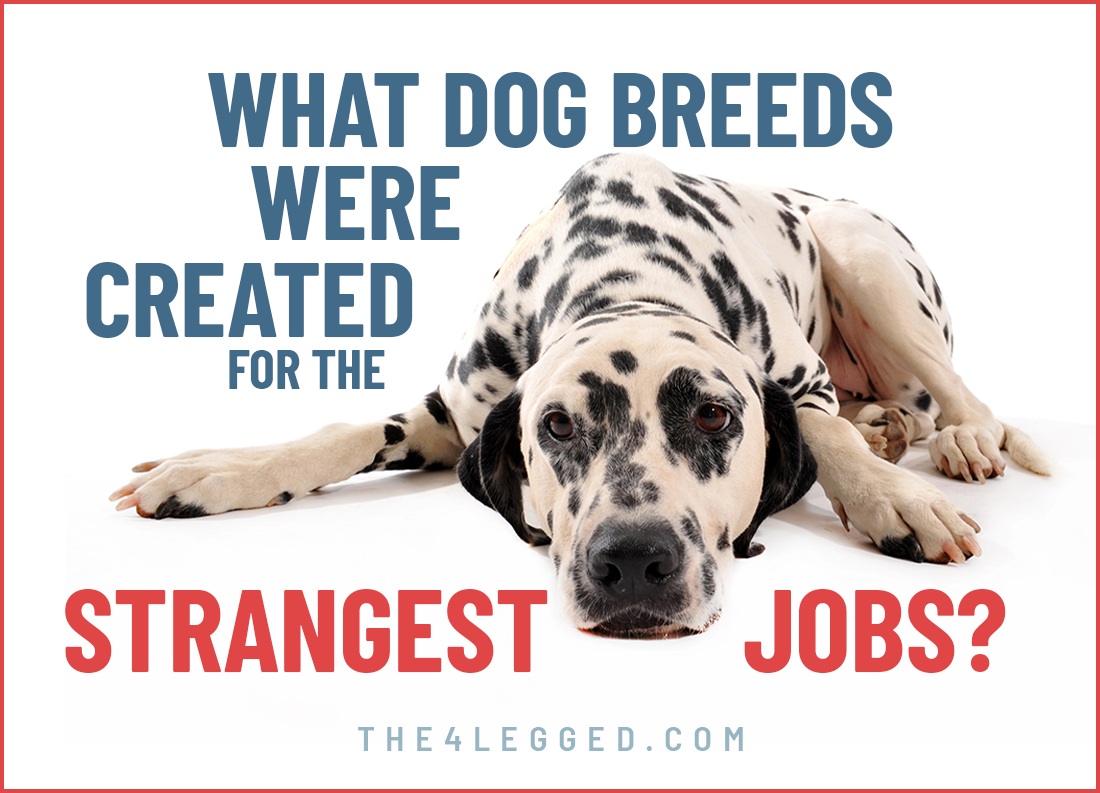
Most people think dogs were bred for simple roles: guard dogs, herding dogs, or family companion dogs. But when you ask what dog breeds were created for the strangest jobs, you uncover canines deliberately created to hunt puffins on cliffs, turn meat over a fire, warm royal feet, and even parachute into war zones.
These sixteen dog breeds were originally bred and born for ultra‑specific jobs that shaped their bodies, behavior, and instincts. Today, most dogs are pets, but their strange working‑dog origins still show up in how they move, think, and play.
1. Dalmatian – The Spotted Coach Dog and Firehouse Trailblazer
The Dalmatian is one of the clearest answers to what dog breeds were created for the strangest jobs. Long before movie fame, Dalmatians were coach dogs running beside horse‑drawn carriages across Europe and the Dalmatia region.
They were originally bred to:
- Run long distances alongside horses without tiring
- Guard coaches, luggage, and sleeping passengers
- Chase away thieves, stray dogs, and other pests on the road
As horse‑drawn fire wagons appeared, Dalmatians became early firehouse dogs. They ran ahead to clear streets, protected valuable horses at the station, and stayed calm around smoke, shouting humans, and chaos. The job of coach dogs disappeared with cars and trucks, but their strong bond with horses and high energy remain obvious today.
2. Norwegian Lundehund – Six‑Toed Puffin Hunter on Vertical Cliffs
The Norwegian Lundehund may be the strangest of all working dogs. It was originally bred on Norway’s remote islands to hunt puffins nesting in narrow cliffside burrows that humans couldn’t reach safely.
To do this specific job, Lundehunds developed unique traits:
- At least six fully functional toes on each foot for better grip on slippery rock
- Extraordinary flexibility in the neck and spine so they can bend the head back toward the spine in tight spaces
- Ears that fold closed to keep out water, dirt, and debris inside burrows
For centuries, families depended on these dogs to hunt puffins for meat and down. Once puffin hunting declined and was later restricted to protect wildlife, their original purpose vanished, and disease nearly wiped them out. Today they are one of the rarest canines, preserved by passionate breeders and kennel club supporters as a living reminder of extreme specialization.
3. Glen of Imaal Terrier – Turnspit “Kitchen Machine” and Tough Earthdog
The Glen of Imaal Terrier is closely linked to one of history’s oddest kitchen jobs. In old Ireland and Britain, some homes used turnspit dogs to rotate meat over open fires.
In the Glen of Imaal region of Ireland, this terrier type reportedly:
- Ran inside a wooden wheel mounted near the hearth
- Powered the spit that turned heavy joints of meat
- Worked in shifts, with two dogs alternating during long roasts
It was hot, exhausting work, turning a dog into living machinery. As mechanical turners and modern ovens arrived, the turnspit job disappeared and the dedicated turnspit dog went extinct. The Glen of Imaal Terrier survived largely because it also excelled at hunting foxes, badgers, rats, and other pests in the earth, showing the classic courage and grit of terriers.
4. Bedlington Terrier – Lamb‑Lookalike Miner and Rat Exterminator
At first glance, the Bedlington Terrier looks like a small lamb, with a curved back and fluffy coat. But this dog was originally bred in the mining towns around Bedlington, Northumberland, for tough, dirty work underground and in factories.
Early Bedlingtons worked as:
- Rat hunters in coal mines, tunnels, and mills
- Fast, agile predators of rats, fox, and other pests that threatened grain and equipment
Their unusual body shape helped them move through low ceilings and cramped spaces, while their courage made them willing to face biting rodents in the dark. Over time, their lamb‑like look and distinctive head shape caught the attention of wealthier dog lovers, who promoted them in show rings as stylish companion dogs, even though their roots are firmly in vermin control.
5. Xoloitzcuintli – Spiritual Guide and Living Hot‑Water Bottle
The Xoloitzcuintli (Xolo) is one of the oldest dog breeds in the Americas and had one of the strangest original jobs. In ancient Mexico, these mostly hairless canines were believed to guide human souls through the underworld after death.
Their roles combined spiritual and practical duties:
- Acting as psychopomps—soul guides—for the dead in Aztec belief
- Being sacrificed and buried with humans so they could lead them to the afterlife
- Serving as warm living heaters for joint pain, chest problems, and cold nights
Families used their warm, bare skin like a natural hot‑water bottle, and some traditional healers believed they could draw illness out of the body. Xolos were sometimes used as a food source as well, making their relationship with humans deeply complex and unlike modern companion dogs or service dogs.
6. Löwchen – Lion Imitation and Portable Noble Foot‑Warmer
The Löwchen, or “little lion dog,” was originally bred for looks more than labor. In Renaissance and Baroque Europe, especially in France and Germany, wealthy families loved symbols of lions for courage and power but wanted them in portable form.
Löwchens were bred and groomed to:
- Resemble miniature lions with a mane, shaved hindquarters, and tufted tail
- Serve as living symbols of status and taste in portraits and at court
- Act as lap and foot warmers in cold stone palaces
They were not herding sheep or guarding cattle. Instead, they functioned as living art and furniture, a very different kind of working dog with a highly specific purpose. At one point they were so rare that they were called the rarest dog in the world, but their affectionate nature has kept them alive as quirky, people‑focused companions.
7. Otterhound – River‑Tracking Hound Built to Hunt Otters
The Otterhound was developed in medieval England for an extremely narrow job: hunting otters that raided fish stocks in rivers and ponds. Landowners saw otters as serious competitors for valuable fish, so they created a specialist scent hound to track and help remove them.
Otterhounds were originally bred with:
- Webbed feet and a rough, oily coat so they could swim for long periods in cold water
- Strong noses able to follow scent trails on land and in water, sometimes more than a day old
- Loud voices to alert hunters along miles of riverbank
Organized otter hunts became popular sporting events. Over time, the dogs were so effective they helped decimate otter populations, and eventually otters became protected wildlife. That legal change erased the Otterhound’s main job almost overnight, leaving the breed extremely rare today—even though it remains a gentle, affectionate family companion and an impressive swimmer.
8. Newfoundland – Fishermen’s Lifeguard and Net‑Hauler
The Newfoundland is a giant working dog that started life as a cold‑water specialist. Developed on the harsh coasts of Newfoundland and Labrador, these dogs helped fishermen with a mix of power and water skills.
They were originally bred to:
- Pull heavy fishing nets filled with wriggling fish back to shore
- Haul carts loaded with supplies, fish, or meat between docks and homes
- Tow small boats through rough water, acting almost like living tugboats
Newfoundlands are also legendary water‑rescue dogs. Historical reports describe them leaping into icy seas to drag shipwrecked sailors and other humans to safety. Their webbed feet, thick double coat, and gentle nature made them perfect for saving lives and working beside families who depended on the sea.
9. Pekingese – Sacred Sleeve Dogs and Lion Spirits
The Pekingese began as sacred palace dogs in imperial China, where they were strictly reserved for royalty and high nobility. These small canines were bred to ride in the wide sleeves of royal robes, earning the nickname “sleeve dogs.”
Their role centered on symbolism and companionship:
- Their lion‑like mane and flat face echoed the guardian lions of Chinese temples
- They served as living emblems of spiritual protection, status, and power
- They provided warmth, comfort, and companionship to emperors and nobles
Commoners were often forbidden to own Pekingese, and a dog might be kept as a highly prized gift or diplomatic token. Their affectionate nature and deep loyalty to one family member made them perfect palace companions, even though they did not herd, guard farms, or hunt like many other breeds.
10. Belgian Malinois – From Herding Fields to Parachuting into War
The Belgian Malinois started as a classic herding dog in Belgium, originally bred to control sheep and cattle with keen intelligence and high energy. Farmers relied on their ability to move animals across long distances and react quickly to subtle commands.
In World War II and beyond, militaries discovered new uses for these traits. Malinois became:
- Messenger dogs and sentries on the front lines
- Explosives and drug detection dogs with intense focus
- Parachuting and rappelling partners for special forces in dangerous missions
Today, Belgian Malinois are elite working dogs used by police units, military teams, and search‑and‑rescue organizations around the world. Their drive, courage, and ability to learn complex tasks reflect both their herding heritage and their modern tactical roles.
11. Corgis – Low‑Riding Cattle Herders with Fairy Saddles
Pembroke and Cardigan Welsh Corgis were originally bred in Wales as compact herding dogs. Their short legs and sturdy bodies allowed them to work closely around cattle and sheep while avoiding kicks.
Their specific purpose included:
- Nipping at the heels of cattle to move them without getting hurt
- Darting under kicking legs thanks to their low height
- Helping farmers move cattle, sheep, and other animals along roads and fields
Legends say the markings on their backs are “fairy saddles,” hinting that mythical creatures once rode them. Today, Corgis are popular companion dogs around the world, but their ankle‑nipping, chasing instincts come straight from their life as hardworking farm dogs.
12. Samoyed – Arctic Sled Dog, Reindeer Herder, and Family Heater
Samoyeds originated with nomadic reindeer herders in Siberia, where surviving winter meant people and dogs had to work as one team. These fluffy white dogs were originally bred to pull sleds, herd reindeer, and help hunt animals for meat and fur.
Their jobs blended work and warmth:
- Hauling sleds across ice and snow in extreme cold
- Helping manage and herd reindeer herds across vast distances
- Sleeping inside tents with families as living heaters, especially for kids
Their thick double coat, friendly temperament, and “Sammy smile” grew out of a life spent constantly with humans and loved ones. Today, they shine in dog sports and as companion dogs, but their instinct to pull, stay close, and protect family remains strong.
13. Great Pyrenees – Independent Night Guard of the Pyrenees Mountains
The Great Pyrenees, or Pyrenean Mountain Dog, was created to guard livestock in the Pyrenees Mountains between France and Spain. Unlike herding breeds that move sheep and goats, these dogs were livestock guardian dogs that lived full‑time with their flocks.
They were originally bred to:
- Watch over sheep and goats at night when wolves and other predators hunted
- Make independent decisions without waiting for human commands
- Use their size, bark, and courage to deter or confront predators
Their thick white coat allowed them to blend with sheep and stay warm at high altitudes. Calm and affectionate with family and “their” animals, yet fierce toward threats, Great Pyrenees show how some dogs were created more to protect than to herd.
14. Cocker Spaniel – Bird Flusher and Gentle Hunter
Cocker Spaniels began as hunting dogs used to flush birds from thick cover so hunters—or sometimes falcons—could take them. The name “Cocker” comes from their work with woodcock, a type of game bird.
Their original job required:
- Strong noses to locate hidden birds
- Willingness to charge into brush and undergrowth
- Responsiveness to human cues during coordinated hunts
Today, Cocker Spaniels are popular family companion dogs with a soft, affectionate nature, but many still excel in field trials and other dog sports that tap into their hunting instincts. Their love of chasing and their focus on scent reflect their origin as skilled bird dogs.
15. Afghan Hound – Mountain Gazelle Chaser Wrapped in Silk
The Afghan Hound looks like royalty, but its original job was anything but delicate. In the mountains and deserts of Afghanistan and nearby regions, these dogs were bred to chase fast prey like gazelles over harsh terrain.
As sighthounds, they hunted by:
- Spotting animals at long distances
- Sprinting across rocky ground at high speed
- Using agility and stamina to keep up with elusive prey
While bloodhounds have an unparalleled nose for tracking, sighthounds such as Greyhounds and Afghan Hounds rely on vision for the chase.
Their long, silky coat protected them from cold winds, dust, and rough surfaces. Modern Afghan Hounds often appear in show rings or as companion dogs, but their strong desire to chase moving animals still comes from their hunting history.
Service Dogs and Their Roles: The Modern Marvels of Canine Assistance
Service dogs are among the most remarkable examples of how canines have been bred and trained to meet the evolving needs of humans. While many breeds were originally bred for specific jobs like herding sheep, guarding livestock, or hunting in medieval England, today’s service dogs take on a wide array of specialized roles that make a profound difference in people’s lives.
Guide dogs, for instance, are carefully selected and trained for their gentle nature, keen intelligence, and ability to navigate complex environments. These dogs act as the eyes for individuals who are visually impaired, helping them avoid obstacles and stay safe in busy streets or unfamiliar places. Hearing dogs, on the other hand, provide their owners with “ears to hear,” alerting them to important sounds like doorbells, alarms, or a loved one calling their name.
The role of service dogs expanded dramatically during World War II, when dogs were used to assist soldiers on the battlefield, deliver messages, and provide comfort in times of stress. This legacy continues today, with service dogs working in hospitals, schools, and homes, offering both practical assistance and emotional support. Drug detection dogs, often German Shepherds or Labradors, use their extraordinary sense of smell to help law enforcement keep communities safe by finding illicit substances.
Companion dogs, such as Border Collies and Golden Retrievers, are celebrated for their affectionate nature and strong bonds with their owners. These breeds, originally bred for high-energy tasks like herding sheep or retrieving game, now excel as therapy and emotional support animals, bringing comfort and joy to people of all ages.
Working dogs remain essential in rural and agricultural settings. In the Pyrenees Mountains, the Great Pyrenees stands guard over sheep and goats, using its courage and protective instincts to keep wolves and other predators at bay. Samoyeds, bred to herd reindeer and endure harsh climates, still demonstrate the stamina and loyalty that made them invaluable to nomadic farmers. Corgis, with their low stature and bold traits, continue to impress with their ability to herd cattle and chase off other pests.
The development of service dogs is a careful process, with kennel clubs and dedicated breeders selecting for traits like intelligence, trainability, and a calm, affectionate temperament. Whether it’s a Labrador guiding a person through a busy city, a Border Collie excelling in dog sports, or a Dalmatian once bred as a coach dog now serving as a loyal companion, these animals showcase the wonder and adaptability of canines.
From the fields of medieval England to the modern city streets, service dogs have proven time and again that their ability to adapt, protect, and support humans is truly extraordinary. As we continue to breed and train dogs for new challenges, their role as working dogs, companions, and protectors remains as vital as ever—reminding us of the deep bond between humans and these remarkable animals.
Summary
These sixteen dog breeds reveal just how deliberately humans have shaped dogs for highly specific—and sometimes downright bizarre—jobs. From hunting puffins on sheer cliffs and turning meat over open fires to herding reindeer and guarding livestock, each role left a lasting mark on a breed’s body, instincts, and behavior. While most of those original jobs no longer exist, the drive, energy, and quirks behind them are still very much alive in our modern companions.
If you share your life with a dog, don’t stop at knowing their name. Take time to learn what they were originally bred to do and how their dog breeds and traits influence the way they move, think, and play today. Giving your dog a purpose—whether it’s learning a new trick, playing a brain game, or following a short daily training routine—can transform excess energy into confidence, strengthen your bond, and help your dog live a calmer, happier, and more fulfilled life.
Frequently Asked Questions
What dog breeds were created for the strangest jobs?
Many dog breeds were originally bred for unusual and highly specific tasks, such as the Norwegian Lundehund for hunting puffins on cliffs, the Glen of Imaal Terrier as a turnspit dog to turn meat over fires, and the Dalmatian as a coach dog running alongside horse-drawn carriages.
Why do some dog breeds still show behaviors related to their original jobs?
Dogs are genetically coded to perform the tasks they were bred for. Even though many breeds are now pets, their instincts, energy levels, and behaviors often reflect their historical roles, such as herding, guarding, or hunting.
Are working dog breeds suitable as family pets?
Yes, many working breeds have affectionate and gentle natures, making them excellent companions. However, they usually require regular physical and mental stimulation to satisfy their high energy and working instincts.
How can understanding a dog’s original job help in training?
Knowing a dog’s historical purpose can guide owners in providing appropriate activities and training that align with the breed’s natural skills and instincts, reducing behavioral problems and enhancing the dog’s well-being.
Are there still dogs bred today for unique or specialized jobs?
Absolutely. While many traditional jobs have disappeared, dogs are still bred and trained for specialized roles such as drug detection, search and rescue, guide dogs for the visually impaired, and even disease detection, showcasing their ongoing versatility.