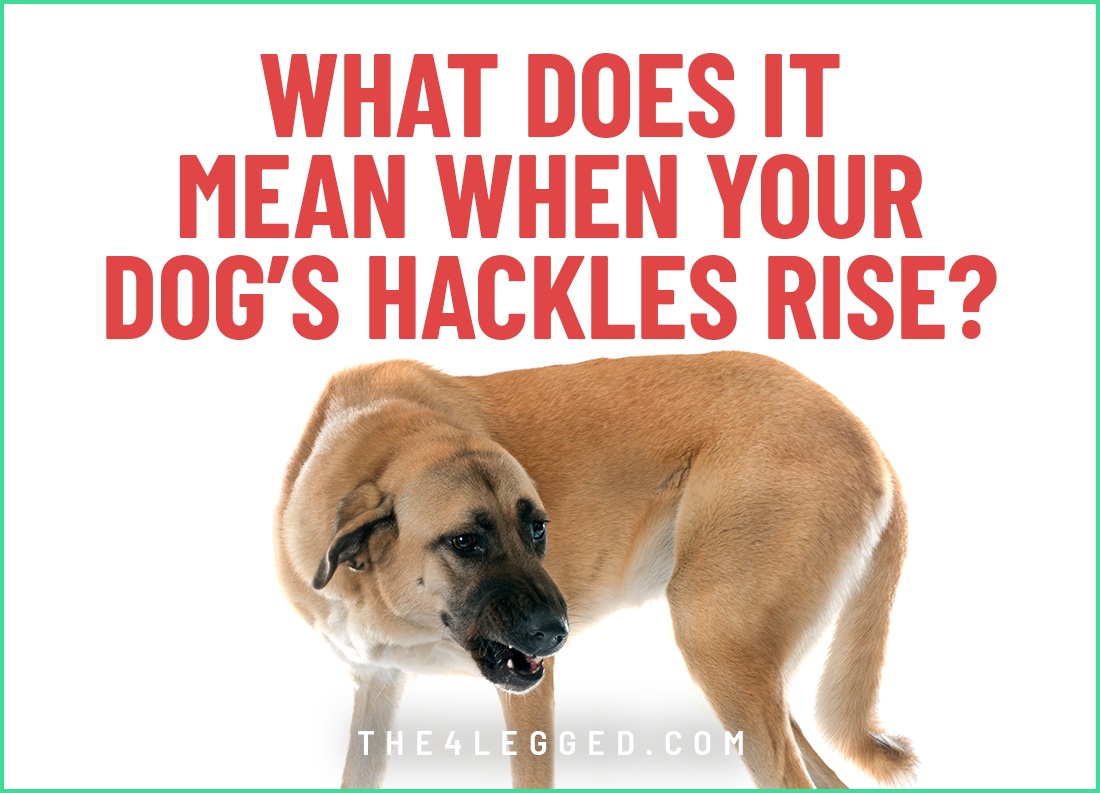
You’re walking your dog through the neighborhood when a stranger rounds the corner, and suddenly you see it—a ridge of fur standing straight up along your dog’s back. Is your dog about to attack, are they terrified, or is their body simply reacting automatically to something surprising or intense in the environment?
That line of raised hair, known as your dog’s hackles, is an involuntary reaction that signals heightened arousal—not a guaranteed sign of aggression or “bad behavior.” Dogs can raise their hackles when they’re scared, excited, frustrated, or unsure, which is why learning to read this reaction in context with the rest of your dog’s body language is so important for responding calmly and keeping everyone safe
Key Takeaways
- Raised hackles are an involuntary reflex indicating heightened arousal and do not always signify aggression.
- Understanding the full context of your dog’s body language alongside raised hackles is essential to interpret their emotional state accurately.
- Responding thoughtfully to raised hackles by creating distance, interrupting escalating behavior, or offering support helps build a stronger, more trusting relationship with your dog.
Quick answer: why your dog’s hackles rise
When your dog’s hackles rise, it means their nervous system has shifted into heightened arousal. This is not the same thing as aggression. The hairs along your dog’s neck, back, and base of the tail stand up due to an involuntary reflex controlled by the sympathetic nervous system—the same system responsible for the fight-or-flight response. This raised hair is commonly referred to as your dog’s hackles.
Several distinct emotional states can trigger this reaction. Fear is a common cause, such as when your dog encounters unexpected fireworks on the Fourth of July. Surprise can trigger it too, like when a plastic bag suddenly blows across the path during a walk. Excitement during play at the dog park, anxiety in unfamiliar environments, or defensive aggression toward a perceived threat can all cause your dog’s hair standing on end.
Here’s the critical point: hackles alone don’t tell the whole story. Owners must read them together with tail position, ear carriage, facial expression, and overall body posture to understand what their dog is actually feeling. Interpreting your dog’s body language as a whole—including hackles—helps you accurately assess their emotional state. A dog with raised hackles and a loose, wiggly body is experiencing something completely different from a dog with raised hackles and a stiff posture.
Raised hackles = “my dog’s nervous system is on high alert,” and I should pay attention to what else their body is saying. This involuntary response can be triggered when a dog feels a lack of control over their environment or emotions.
What are hackles on a dog?
Hackles are the strip or patch of fur running from the back of the neck, along the dog’s spine, to the base of the tail that can stand on end when a dog is emotionally aroused. In most dogs, this raised area looks like a narrow ridge or mohawk running down the back. In others, it appears as a broader ruff concentrated over the shoulders and neck area.
Some breeds have unique coat characteristics that can create confusion. Rhodesian Ridgebacks, for example, have a permanent ridge of reversed hair along the spine. This is a structural trait bred into the dog, not a sign of arousal. Their hackles can still rise on top of this ridge, but the ridge itself is always visible regardless of emotional state.
Coat type significantly affects how visible hackles are on individual dogs. German Shepherds with their thick double coats display very prominent hackles when aroused. Labrador Retrievers show them clearly due to their short, dense fur. When a dog is excited, threatened, or aroused, the dog’s hair along the spine stands up as a visible signal. Poodles and other breeds with longer, curlier coats may have hackles that are harder to spot. Short-haired breeds like Boxers or Pit Bulls often show subtle but noticeable hackle patterns, while heavily feathered breeds might obscure the response entirely under layers of fluff. Each dog’s hackle pattern can vary, so your current dog may show hackles differently than others.
The science behind raised hackles (piloerection)
The technical term for raised hackles is called piloerection, and it’s the same basic reflex that gives humans goose bumps when we’re cold, frightened, or experiencing powerful emotion. The word comes from the Latin “pilo” for hair—a fitting origin for a phenomenon shared across mammals, from dogs and cats to rats and even humans.
Here’s how the physiology works: tiny muscles called arrector pili sit at the base of each hair follicle. When the sympathetic nervous system activates—the branch responsible for fight-or-flight responses—these muscles contract involuntarily. The contraction pulls each hair follicle upright, making the fur stand on end. This is what causes your dog’s hair standing, an involuntary reaction that communicates arousal, excitement, or feeling threatened.
This involuntary response serves an evolutionary purpose. Raised fur traps a layer of air close to the skin, providing some insulation in cold conditions. More importantly for survival, it makes the animal appear larger to potential threats. Think of a cat puffing up its tail when confronted by a dog, or a porcupine raising its quills. Your dog’s raised hackles are part of this same ancient defense mechanism.
Dogs do not consciously choose to raise their hackles. This involuntary reaction happens automatically, which is why a dog can have hackles up even while trying to avoid conflict or signal that they want distance. It’s similar to how you can’t prevent blushing when embarrassed or stop your heart from racing when startled.
There’s also individual variation in how hackles present. Some dogs only raise hackles in a thin line down the dog’s spine. Others show a broad patch of raised fur over the shoulders, croup (the area just in front of the tail), or the entire back from neck to tail. Genetics, coat structure, and the intensity of arousal all influence these patterns.
What does it mean when your dog’s hackles rise?
Raised hackles mean your dog is emotionally charged, but the emotion could be positive, negative, or somewhere in between. The same way your heart pounds during both a scary movie and an exciting roller coaster, your dog’s hackles can rise across a spectrum of emotional states.
Let’s break down specific scenarios and what hackles might mean in each:
Fear or anxiety: Picture a dog whose hackles go up when a stranger approaches on a dark evening walk. The dog’s weight shifts backward, their tail tucks low, and they try to create distance. This is a fearful dog using piloerection as an unconscious attempt to look larger and more intimidating while simultaneously wanting to escape. Young dogs in developmental fear periods, such as a puppy or young dog, often display this response when encountering novel threats.
Defensive aggression: Here, hackles appear alongside more threatening signals. The dog raises their hackles while showing teeth, producing a low growl, and adopting a stiff posture leaning forward toward another dog or person. Their tail might be held high and rigid rather than tucked. This combination signals a dog prepared to defend themselves if the threat continues.
Alert or suspicion: Your dog spots something unusual—a person wearing a hood, a skateboard rolling by, a plastic bag blowing across the parking lot. Hackles rise as the dog freezes and stares, trying to assess whether this novel stimulus represents a threat. This is high alert without necessarily tipping into fear or aggression.
Excitement and overarousal in play: Watch dogs at a busy dog park during an intense chase game. Hackles often rise even though the dogs are clearly having fun—bodies loose and bouncy, mouths open in play faces, taking turns chasing each other. Even a friendly dog or other dog can show raised hackles during positive interactions, as this excitement-driven hackle response shows that arousal, not just negative emotion, triggers the reaction.
Frustration: Consider a leash-reactive dog who spots another dog across the street but cannot greet them. Hackles rise as the dog paces, whines, and pulls at the leash. The inability to investigate or interact creates frustrated arousal that manifests physically. A dog’s past experiences with similar situations can influence how strongly their hackles rise in response to frustration.
The key takeaway is that the same physical reaction—hackles are raised—can signal completely different emotional states depending on context and accompanying body language.
Introduction to Canine Behavior
Understanding canine behavior is essential for anyone who wants to build a strong, trusting relationship with their dog. Dogs communicate primarily through body language, using subtle signals to express their emotional state, intentions, and reactions to the world around them. One of the most noticeable—and sometimes misunderstood—signals is when a dog’s hackles are raised, causing the hair along their spine to stand up.
This reaction, known as raised hackles or piloerection, is just one piece of the complex puzzle that makes up a dog’s behavior. It can be triggered by a variety of emotions, from excitement and curiosity to fear or uncertainty. By learning to observe and interpret these changes in your dog’s body, you gain valuable insight into what your dog is feeling in any given moment.
Recognizing when your dog’s hackles are raised, and understanding what this body language might mean in context, allows you to respond appropriately—whether that means offering reassurance, creating distance from a trigger, or simply giving your dog space to process their environment. Ultimately, paying attention to your dog’s body language, including raised hackles, helps you better support their emotional well-being and strengthens the bond you share.
Reading hackles with the rest of your dog’s body language
Hackles are one piece of a larger body language puzzle. Treating them as the sole indicator of your dog’s emotional state is like trying to understand a sentence by looking at only one word. Smart owners scan the whole body, not just the fur on the back.
Here’s how to read combinations:
Hackles + relaxed body, loose wiggle, soft eyes, open mouth: This typically signals excitement or playful arousal. The pup might be anticipating a walk, greeting a favorite person, or warming up for play. Despite the raised fur, everything else screams happy dog. Look for a wagging tail with broad sweeps, weight shifting easily, and a willingness to approach.
Hackles + stiff posture, closed mouth, hard stare, tail high and tight: This combination warrants caution. The dog may be experiencing defensive or offensive aggression and could be ready to lunge or snap. A confident dog in this posture is communicating a clear warning. Create distance immediately.
Hackles + crouched body, tail tucked, ears pinned back, weight shifting away: This is fear. The dog is trying to look larger through piloerection while simultaneously making themselves smaller and attempting to increase distance. They’re conflicted—wanting to appear threatening enough to deter approach while desperately hoping to avoid confrontation. A scared pet in this state needs space, not reassurance that could be perceived as pressure.
Hackles + stillness and slow movement, lip licking, yawning, or looking away: High stress and internal conflict. The dog doesn’t know what to do. These calming signals combined with hackles suggest the animal is trying to diffuse tension while their nervous system remains on high alert. Dilated pupils often accompany this state.
When you spot raised hackles, quickly run through a mental checklist: What’s the tail doing? Are the ears forward, neutral, or pinned back? Is the mouth open and relaxed or closed and tight? Is the dog leaning forward, standing neutral, or pulling backward? Is their whole body stiff or loose? This rapid assessment takes practice but becomes automatic with time.
Patterns of raised hackles and what they might suggest
Where the hackles rise on your dog’s body can sometimes hint at their emotional state, though this isn’t a rigid rule and varies between individual dogs.
A narrow strip of raised hair from shoulders to tail is often seen in more confident, forward-moving dogs, especially when they’re highly focused on something. Think of a hunting dog locked onto prey scent or a confident dog approaching an unfamiliar situation with curiosity rather than fear.
A broad patch of raised fur concentrated over the neck and shoulders is sometimes associated with low confidence, uncertainty, or fearfulness. Dogs displaying this pattern may be more conflicted about how to respond—wanting to appear larger while feeling unsure about the situation.
Some dogs raise hackles only at the withers (the area between the shoulder blades), others primarily over the croup (just in front of the tail), and some display raising along the entire back. These patterns are influenced by coat type, genetics, and the specific emotional state the dog is experiencing.
It’s worth noting that formal research on exact pattern-emotion correlations remains limited. Current understanding comes mostly from expert observation and clinical experience rather than controlled scientific studies. Use these patterns as general guidelines rather than definitive diagnoses of your current dog’s emotional state, and remember that observing your dog’s hackles is just one part of interpreting their overall body language.
Common situations where you might see your dog’s hackles rise
Most owners first notice hackles during ordinary, everyday moments rather than dramatic confrontations. Recognizing common triggers helps you anticipate and prepare.
Meeting unfamiliar dogs on leash: Saturday morning walks through a busy neighborhood often bring unexpected dog encounters. Your new dog spots another dog approaching, and those hackles go up as they assess whether this stranger is friend or threat. This is a classic example of your dog’s hackles being used as a communication cue to signal arousal or alertness. Leash tension can amplify this response.
Encountering unusual objects: A person carrying an umbrella, a skateboard rolling by on the sidewalk, a flapping plastic bag caught on a fence in the parking lot—novel objects that move unpredictably often trigger the alert response. Your dog’s hair standing is a visible sign as they freeze, stare, and try to categorize this strange thing.
Hearing loud noises: The clatter of a dropped pan in the kitchen, thunder rolling during a June storm, or fireworks exploding on New Year’s Eve can all send hackles up in a heartbeat. Loud noises trigger the startle response, and many dogs struggle to recover quickly from unexpected sounds.
Seeing strangers approach the home: A delivery driver walking up to the door, a repair technician entering the yard, or an unfamiliar person peering over the fence can all trigger territorial awareness. Hackles rise alongside a bark as your dog announces the intrusion and attempts to appear more formidable.
During high-energy play sessions: Even joyful play can push dogs into overarousal. At a fenced dog park or in the backyard, intense chase games or wrestling matches often feature hackles raised on one or more participants. A play bow followed by a chase might include hackles up on both the pursuer and the pursued.
In veterinary clinics or grooming salons: Unfamiliar smells, strange handling, unusual equipment, and the general stress of these environments can keep a dog’s arousal elevated throughout the visit. Hackles may rise and stay raised, reflecting ongoing anxiety rather than a specific trigger.
Noticing patterns in these everyday triggers helps you anticipate when your dog’s hair might stand up as a physical indicator and prepare appropriate responses.
What to do when your dog’s hackles go up
Seeing your own dog’s hackles rise is a cue to observe and make thoughtful choices—not to panic, scold, or punish. This involuntary reflex is providing you with valuable information about your dog’s internal state, often signaling that your dog feels a lack of control over their environment or emotions.
First step: pause and assess. Quickly scan your dog’s other body-language signals—tail, ears, mouth, posture—and check the environment to identify the likely trigger. Is there another animal nearby? Did a loud noise just happen? Is someone approaching? Understanding the cause helps you choose the right response.
If your dog seems fearful or defensive: Your job is to create distance and reduce pressure. Quietly turn away from the trigger, cross the street if another dog is approaching, or step behind a parked car to break the line of sight. Don’t force your scared pup to confront what’s frightening them. Moving away helps them remain calm and learn that you’ll protect them from overwhelming situations. If your dog raises their hackles in response to fear or aggression, it is important to seek professional help. A dog that consistently shows signs of aggression should be evaluated by a professional trainer or behaviorist. Professional trainers can help identify triggers and create a training plan for dogs that exhibit fear or aggression.
If your dog is overexcited in play: Briefly interrupt the game. Call your dog away or gently guide them on leash for a short break. Let arousal levels drop—this might take 30 seconds to a few minutes. Watch for body language to soften before resuming play. If hackles keep popping up during the same play session, consider ending the game entirely. If your dog is unable to calm down after becoming overstimulated, it is advisable to seek professional assistance.
For frustration or leash reactivity: Change direction before things escalate. Use a cheerful “Let’s go!” cue and reward your dog for disengaging from the trigger. Moving creates both physical and mental distance. The goal is to prevent the behavior from practicing and reinforcing. If your dog is exhibiting aggression and is in a situation that could escalate, you need to distract them and remove them from the area.
What to avoid: Never punish or scold a dog for raising hackles. Remember, this is an involuntary reaction—your dog isn’t choosing to do it any more than you choose to sweat when nervous. Punishment adds stress and can make emotional reactions around triggers worse over time. A dog who learns their warning signals lead to punishment may skip warnings entirely and go straight to more aggressive behavior like snapping.
Proactive training helps: Teaching attention cues, pattern games like “1-2-3” walks (step, step, step, treat), or hand-targeting gives your dog practiced behaviors to fall back on when aroused. When a dog has a predictable response to rehearse, they’re less likely to stand frozen in uncertainty with hackles raised. You can also refocus your dog’s energy by scattering treats in the grass or in a snuffle mat to get their nose to the ground. Proper socialization and positive reinforcement training can help prevent fear responses in the future.
Helping your dog feel safer and less reactive over time
Repeated situations where hackles go up signal a need for long-term support, not just in-the-moment management. If your dog raises hackles every time they see another dog, every time someone comes to the door, or every time you pass a certain house on walks, it’s time to think about changing their underlying emotional response.
Controlled exposure with positive reinforcement can gradually shift how your dog feels about triggers. This might look like watching other dogs from a comfortable distance while receiving high-value treats on everyday walks. Over time, the distance decreases as your dog learns that other dogs predict good things rather than threat. This process takes patience—sometimes weeks or months—but creates lasting change.
Environmental management reduces daily stress. Choose quieter walking routes during busy times. Avoid the crowded dog park on Saturday mornings if it overwhelms your pet. Use window film or barriers at home to limit visual access to triggers outside, reducing the number of times per day your dog practices that aroused, hackles-up response.
Mental and physical exercise helps reduce baseline arousal. A dog whose needs are met is less likely to react intensely to triggers. Try nose work games where your pup searches for treats hidden around the house, sniff walks where your dog sets the pace and explores, food puzzles that require problem-solving, or short training sessions that engage their brain.
Keep a simple log of when hackles rise. Note the date, location, trigger, and other body language you observed. Patterns will emerge—maybe your dog reacts more strongly in the evening, or specifically to men in hats, or after a stressful event earlier in the day. This information helps you plan training and measure improvement.
Consider a veterinary check if hackles go up frequently without obvious reason. Some dogs have underlying medical issues—pain, thyroid imbalances, or neurological conditions—that lower their coping ability and increase reactivity. Ruling out physical causes is always a smart first step.
When to get professional help
Frequent or intense hackle episodes, especially combined with aggression, justify support from qualified professionals. Some situations are beyond what owners should attempt to handle alone.
Red flags that signal time for expert help:
- Hackles up combined with lunging, snapping, or biting toward people or other animal encounters
- Sudden behavior changes in an adult dog who previously handled situations calmly—for example, a dog who was fine with visitors for years suddenly reacting aggressively around age four or five
- Dogs who cannot relax on walks, at home, or in the yard, seeming to be on constant high alert with hackles raised frequently throughout the day
- Any situation where you feel unsafe or concerned about what might happen next
Start with your veterinarian. They can rule out pain, endocrine disorders, or neurological issues that may be driving heightened arousal and reactivity. What looks like a behavior problem sometimes has a medical root cause.
Work with qualified professionals for structured behavior modification. Look for certified reward-based trainers (certifications like CPDT-KA, KPA-CTP) or veterinary behaviorists (DVMs with specialized training in animal behavior) who use counterconditioning and desensitization rather than punishment-based methods. These approaches address the underlying emotional state rather than just suppressing the visible reaction.
Professional support typically costs between $100-300 per session, but the investment pays dividends in safety and quality of life for both you and your dog. With time, consistency, and the right guidance, most dogs can learn to feel safer and more confident, so that hackles rise less often and less intensely.
Summary
Raised hackles, or piloerection, are an involuntary reflex that signal your dog’s nervous system has shifted into a state of heightened arousal, not necessarily that they’re being “aggressive” or “bad.” Fear, excitement, frustration, anxiety, and even intense curiosity can all cause your dog’s hair to stand up, which is why you always need to read hackles alongside tail position, ear carriage, facial expression, and overall body posture to truly understand how they’re feeling.
When you learn to recognize raised hackles as an important emotional message rather than a problem behavior, you can respond more thoughtfully—by creating distance, offering support, or interrupting escalating situations—so your dog feels safer and more understood. If you’d like more help reading your dog’s body language or supporting a reactive or sensitive pup, explore our full library of training and behavior resources on our website to take the next step toward calmer, more confident walks together.
Frequently Asked Questions
What does it mean when my dog’s hackles rise but they seem happy?
Raised hackles indicate heightened arousal, but this doesn’t always mean negative emotions. If your dog’s body language is relaxed, with a wagging tail and playful behavior, the raised hackles often signal excitement or anticipation rather than fear or aggression.
Are raised hackles always a sign of aggression?
No. Raised hackles are an involuntary reflex showing arousal, which can be caused by various emotions such as fear, excitement, surprise, or anxiety. Aggression is only one possible cause and must be assessed along with other body language cues.
How can I tell if my dog is fearful or aggressive when their hackles are raised?
Look at the whole body language. Fearful dogs often have a tucked tail, crouched posture, and may try to move away, while aggressive dogs usually show stiff posture, direct stare, bared teeth, and a raised tail. The context and other signals help determine the emotional state.
Should I be worried if my puppy’s hackles rise frequently?
Puppies often raise their hackles during developmental fear periods or when exploring new experiences. This is normal but requires gentle guidance and socialization to help them build confidence and reduce anxiety over time.
What should I do when I notice my dog’s hackles rising?
Pause and assess the situation carefully. Observe your dog’s overall body language and environment to understand the trigger. If your dog is fearful or defensive, create distance and avoid forcing interaction. If excited, monitor to prevent overstimulation. Never punish your dog for this involuntary reaction.